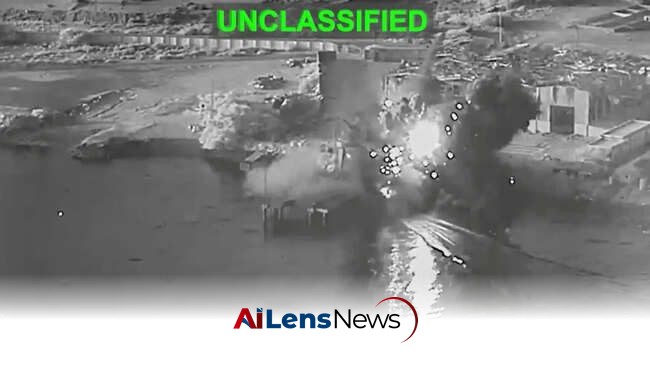


The US military's recent strikes on an Iranian oil tanker have escalated tensions, significantly slowing commercial shipping through the Strait of Hormuz. Energy markets remain on high alert amid ongoing military threats.
New Delhi, India Jul 16, 2026 ALN: The ongoing conflict between the United States and Iran has reached a new and alarming phase, particularly following the recent military actions taken by Washington against an oil tanker near Iran's primary export terminal at Kharg Island. This incident marks the first instance of such an attack since the U.S. reimposed a blockade on Iranian ports, indicating a significant escalation in the military campaign that now appears to extend beyond conventional military targets. The implications of this development are profound, not only for the two nations involved but also for global energy markets and international diplomatic relations.
The strike occurred deep within the Persian Gulf, an area of strategic importance due to its proximity to the Strait of Hormuz. This strait is a critical global energy chokepoint, responsible for the passage of nearly one-fifth of the world's oil supply. The U.S. has intensified its pressure on Tehran, particularly concerning Iran's ongoing restrictions on shipping through this vital waterway. The situation is particularly precarious as any disruption in the Strait of Hormuz can have cascading effects on global oil prices and supply chains, given its importance to energy-dependent economies.
Iran warns Strait of Hormuz is a 'red line' and will resist until the end.
In retaliation for the U.S. strike, Iran launched missiles targeting U.S. military bases located in Kuwait and Jordan. Reports from Jordanian authorities indicate that eight of these missiles were intercepted before they could reach their intended targets. This exchange of fire highlights a troubling trend where both nations appear to be broadening the scope of their conflict, even as the possibility of diplomatic resolution diminishes. The military actions taken by both sides suggest a willingness to escalate tensions, raising concerns about the potential for a wider regional conflict.
U.S. President Donald Trump has made it clear that Washington intends to continue its military strikes until Iran agrees to reopen the Strait of Hormuz. He has indicated that the U.S. may target critical infrastructure, including bridges and power plants, as part of its military strategy. This stance has been met with a firm response from Iranian officials, who maintain that as long as the U.S. does not recognize the legitimacy of Iran's legal system, the Strait will remain closed to international shipping. An Iranian army spokesperson emphasized that any attacks on civilian infrastructure would provoke a much broader regional response, underscoring the potential for escalation.
The recent military escalation has severely undermined a fragile memorandum of understanding (MoU) that was signed between Washington and Tehran approximately a month ago. This agreement was intended to facilitate the reopening of the Strait of Hormuz after weeks of significant disruption. However, Iranian parliamentary speaker Mohammad Bagher Ghalibaf has publicly stated that Tehran no longer sees any reason to adhere to the interim agreement, although he has refrained from officially announcing a withdrawal.
Both the U.S. and Iran have accused each other of violating the terms of the MoU, particularly regarding the expected pace of resuming shipping through Hormuz. This latest flare-up follows Washington's decision to reimpose a blockade on Iranian ports and to end a sanctions waiver that had previously covered certain aspects of Iran's oil trade. The reintroduction of these sanctions is likely to exacerbate the already strained relations between the two nations.
U.S. Vice President JD Vance defended the administration's approach, framing it as a multifaceted strategy that combines military pressure, sanctions, and diplomatic efforts. During an appearance on Joe Rogan's podcast, Vance stated that while Washington remains open to negotiations, it is unwilling to deploy large numbers of ground troops for the purpose of regime change in Iran. This nuanced stance reflects the complexities of U.S. foreign policy in the region, where military action and diplomacy must be carefully balanced.
The U.S. military reported that it had targeted an unladen, Curaçao-flagged supertanker that had ignored multiple warnings while attempting to approach an Iranian port near Kharg Island. In addition to military strikes, American naval forces have been escorting over ten commercial vessels safely through the Strait of Hormuz overnight. However, despite these efforts, commercial shipping activity through this strategic waterway has significantly slowed.
According to reports from RBC Capital Markets, average daily oil flows through the Strait of Hormuz have declined from approximately 4.6 million barrels to about 3.9 million barrels over the past week. This reduction in oil flow is likely to keep energy markets on high alert. Although Brent crude oil prices have eased slightly, they remain around $85 a barrel, reflecting an 11% increase for the week due to ongoing concerns about supply disruptions.
Despite the military escalation, President Trump has claimed that Tehran has expressed interest in reviving negotiations. He mentioned receiving a call indicating that Iranian officials want to meet, although Iran has not publicly confirmed any new diplomatic outreach. Additionally, Trump noted that Iran had released an American citizen who had been detained since December 2024, framing this move as a "gesture of goodwill." This development could potentially serve as a stepping stone toward renewed dialogue, although the overall climate remains fraught with tension.
Meanwhile, the latest U.S. strikes have primarily targeted military installations in southern Iran, including facilities associated with missiles, drones, and radar systems. Analysts have pointed out that the current military campaign is less intensive than the large-scale bombardment witnessed during the peak of hostilities in March and April. This suggests that while tensions remain high, there may be a strategic calculation on the part of the U.S. to avoid a full-scale conflict.
In Washington, Congressional Republicans are advocating for increased defense spending, even as political concerns grow regarding the financial implications of the conflict ahead of the upcoming midterm elections in November. The White House is also contemplating extending shipping waivers to facilitate the movement of oil, fuel, and fertilizers, as prolonged disruptions in the Gulf threaten not only regional stability but also global supply chains and commodity markets.
As the situation continues to evolve, the international community remains watchful. The potential for further military actions or diplomatic breakthroughs hangs in the balance, and the implications for global energy markets and geopolitical stability are profound. The ongoing tensions between the U.S. and Iran serve as a stark reminder of the complexities of international relations in a region marked by historical grievances, strategic interests, and the ever-present specter of conflict.
To learn more about the latest developments in Corporate & Industry Insights, stay updated with our exclusive reports and analyses on AiLensNews.

