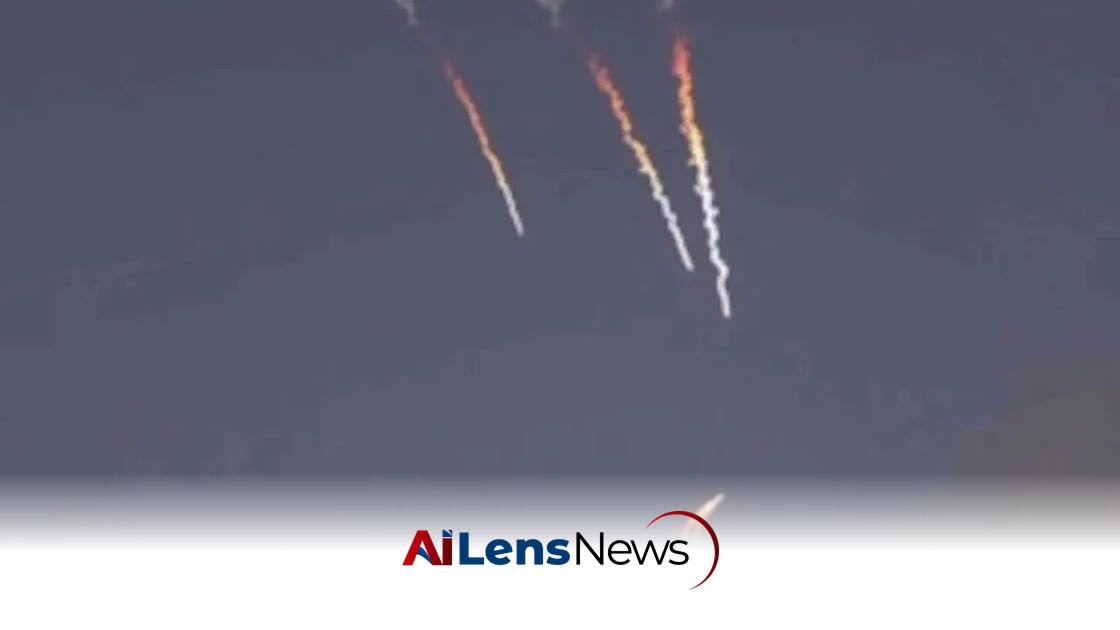


The United States has escalated its military actions against Iran, conducting multiple airstrikes following the deaths of U.S. service members, raising concerns over global energy supplies.
New Delhi, India Jul 19, 2026 ALN: DUBAI, - The U.S. has executed its eighth consecutive night of airstrikes against Iran, following the deaths of two U.S. military personnel in Jordan due to an Iranian attack. This escalation comes after a recent ceasefire agreement fell apart, increasing fears of a return to all-out war. The tensions have been escalating for months, with both sides exchanging threats and military actions that have raised alarms in the international community about the potential for a broader conflict in the Middle East.
U.S. Central Command announced that the latest airstrikes commenced at 6 p.m. ET (2200 GMT) on Saturday, directed by President Donald Trump. The strikes aim to degrade Iran's capability to threaten commercial shipping in the Strait of Hormuz and to retaliate against the Islamic Revolutionary Guard Corps (IRGC) for their attacks on American forces. The Strait of Hormuz is a vital waterway through which a significant portion of the world's oil supply is transported, making any military engagement in this area particularly concerning for global energy markets.
Central Command confirmed that the airstrikes targeted Iranian military coastal surveillance and air defense facilities. Reports from Iran's Mehr news agency indicated that the U.S. conducted an attack near Sirik in southern Iran, although no casualties or infrastructure damage have been reported. The precision of these strikes reflects a strategic approach by the U.S. to minimize collateral damage while still sending a strong message to Iran regarding its aggressive posture in the region.
In response to the U.S. strikes, Iran launched drone attacks targeting U.S. military assets at Kuwait's Al-Adiri camp and Ali Al Salem Air Base. Both bases were reportedly targeted as part of Iran's broader retaliation against U.S. forces and allies in the Gulf. The use of drones in this conflict underscores a shift in military tactics, with Iran leveraging its capabilities in unmanned aerial vehicles to project power and retaliate against perceived aggressions.
Kuwait's military confirmed that it intercepted Iranian missiles and drones, while Bahrain's air defenses also thwarted an Iranian attack. Fortunately, there were no reported casualties or damage from these incidents. The successful interception of these threats highlights the importance of regional defense systems and the role of U.S. military support in safeguarding allied nations from Iranian aggression.
The ongoing conflict has raised significant concerns regarding energy supplies and global inflation. The U.S. has enforced a naval blockade on Iran, while Tehran claims to target vessels that violate its navigation rules in the Strait of Hormuz, a critical passage for global oil supply. This blockade is part of a broader strategy to curb Iran's influence in the region and to prevent the Islamic Republic from exporting oil, which is vital for its economy.
Iran's Islamic Revolutionary Guard Corps stated that four vessels attempted to transit the strait via an unsafe route, allegedly with U.S. backing. Two vessels abandoned their attempts, while the others were involved in an unspecified accident. The situation in the Strait of Hormuz is particularly precarious, as any disruption could lead to significant spikes in oil prices and have a ripple effect on the global economy, which is already grappling with inflationary pressures due to a variety of factors, including supply chain disruptions caused by the COVID-19 pandemic.
Central Command reported that the deaths of two U.S. service members occurred on Friday, with a third member currently missing. This brings the total number of U.S. service members killed since the onset of the conflict to 16, with over 420 injured. The increasing toll on U.S. forces has prompted calls for a reassessment of military engagement strategies in the region, as the risks associated with continued operations against Iran become more pronounced.
Iran's Health Ministry claimed that U.S. strikes have resulted in 50 Iranian fatalities and over 500 injuries in the past three weeks alone. The conflict, which began with U.S. and Israeli strikes on Iran aimed at disabling its nuclear and missile programs, has led to major disruptions in energy supplies and heightened global inflation fears. The high number of casualties on both sides raises ethical questions regarding the conduct of military operations and the potential for civilian harm in the ongoing hostilities.
In a statement, Iranian Supreme Leader Ayatollah Mojtaba Khamenei condemned U.S. actions, asserting that they demonstrate the lack of credibility in U.S. President Donald Trump's signature agreements. Khamenei warned of even heavier costs and further humiliation for the United States. This rhetoric reflects Iran's determination to resist U.S. pressure and to assert its sovereignty in the face of what it perceives as foreign aggression. The Iranian leadership has historically used external threats to unify domestic support, and the current conflict may serve to bolster nationalistic sentiments among the Iranian populace.
The situation remains tense, with both sides continuing to exchange military actions and threats. The international community is closely monitoring developments, as the potential for escalation looms large. Diplomatic efforts to de-escalate the situation have so far been unsuccessful, and with both nations entrenched in their positions, the risk of miscalculation or unintended consequences remains a significant concern. The implications of this conflict extend beyond the immediate region, with potential impacts on global security dynamics, energy markets, and international relations.
The current escalation of hostilities between the U.S. and Iran can be traced back to a series of events that have shaped their fraught relationship over decades. The 1979 Iranian Revolution, which resulted in the overthrow of the U.S.-backed Shah, marked a significant turning point that led to the severing of diplomatic ties between the two nations. Since then, Iran has often been viewed by U.S. policymakers as a destabilizing force in the Middle East, particularly due to its support for militant groups and its nuclear ambitions.
In recent years, the U.S. withdrawal from the Joint Comprehensive Plan of Action (JCPOA) in 2018 under President Trump exacerbated tensions. The agreement, which aimed to limit Iran's nuclear program in exchange for sanctions relief, was seen by many as a critical step toward preventing nuclear proliferation in the region. The U.S. exit from the deal and the subsequent reinstatement of harsh sanctions triggered a series of retaliatory actions from Iran, including attacks on shipping vessels and U.S. military installations.
The ongoing conflict has broader implications for regional stability in the Middle East. Countries like Saudi Arabia, Israel, and the United Arab Emirates have expressed concerns about Iran's influence and military capabilities. The U.S. has positioned itself as a counterbalance to Iranian power, leading to increased military cooperation with these nations. However, this alignment also raises the risk of a regional arms race, as neighboring countries may seek to bolster their defenses in response to perceived threats from Iran.
Moreover, the humanitarian impact of the conflict cannot be overlooked. As military actions continue, civilian populations in both Iran and the U.S. military's areas of operation are at risk. The potential for displacement, loss of life, and disruption of essential services poses a significant challenge for humanitarian organizations working in the region. The international community faces the daunting task of addressing these humanitarian needs while navigating the complex geopolitical landscape.
The U.S. airstrikes against Iran mark a significant escalation in a long-standing conflict characterized by deep-seated animosities and competing interests. As both sides remain entrenched in their positions, the need for diplomatic engagement becomes increasingly urgent. The potential for miscalculation and the far-reaching consequences of continued hostilities underscore the importance of finding a path toward de-escalation and dialogue. The international community must remain vigilant as the situation unfolds, recognizing the implications not only for the Middle East but for global security and stability as well.
To learn more about the latest developments in Corporate & Industry Insights, stay updated with our exclusive reports and analyses on AiLensNews.

