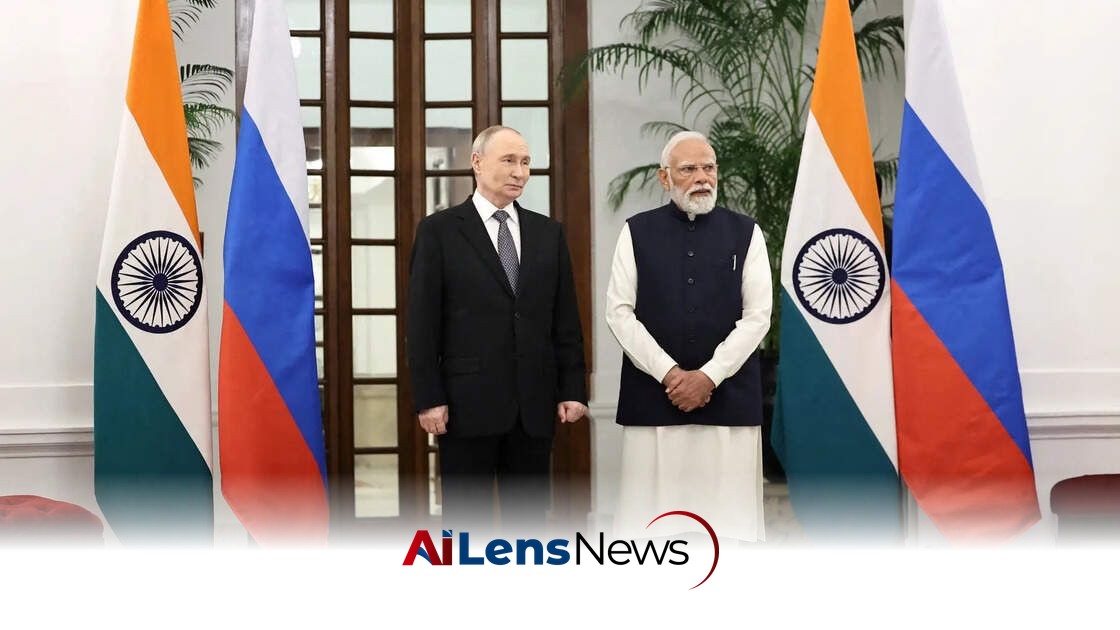


India and Russia aim for $50 billion in mutual investments by 2030, focusing on advanced manufacturing, critical minerals, and green technology.
New Delhi, India Jul 6, 2026 ALN: New Delhi: Amid growing momentum in their partnership, India and Russia are aiming to achieve $50 billion in mutual investments by 2030 through joint projects in advanced manufacturing, critical minerals, and green technology.
The India-Russia Joint Working Group on Priority Investment Projects, co-chaired by DPIIT Secretary Amardeep Singh Bhatia and Russian Deputy Minister of Development Vladimir Iliychev, met in Moscow last Friday and agreed to encourage private companies to explore opportunities in both countries and promote joint projects across key sectors, particularly advanced manufacturing, green hydrogen, energy storage, metallurgy, mining, critical minerals, and new and emerging technologies.
This ambitious target of $50 billion in mutual investments reflects the strengthening of ties between India and Russia, which have historically maintained a robust partnership, particularly in defense and energy sectors. The recent focus on diversifying their collaboration into newer areas such as green technology indicates a strategic shift towards sustainable development and innovation, aligning with global trends towards environmental sustainability and energy efficiency.
During the meeting, the Indian side presented investment opportunities, reforms, and major developments in India, highlighting the availability of cost-effective skilled manpower and offering a strong platform for Russian industry to invest and grow jointly with Indian industry. This emphasis on skilled labor is crucial, as India has a demographic advantage with a young workforce, which could be attractive for Russian companies looking to expand their operations in Asia.
Moreover, the joint focus on advanced manufacturing and critical minerals is particularly significant in the context of global supply chain disruptions and the increasing demand for technology-driven products. Advanced manufacturing encompasses a range of industries, including robotics, aerospace, and biotechnology, which are pivotal for enhancing productivity and innovation. Critical minerals, on the other hand, play a vital role in the production of high-tech devices, electric vehicles, and renewable energy technologies, making their development essential for both nations' growth.
During the visit, the DPIIT Secretary was accompanied by representatives from India's premier industry chambers, CII and FICCI. The CII delegation, led by Rajasekharan Jambulingam, Managing Director of Value Energy Technologies Pvt Ltd, participated in the Russia-India Investment Forum held in Moscow and highlighted the growing potential for bilateral investments, stronger industrial collaboration, and resilient supply chains. This participation underscores the importance of public-private partnerships in facilitating investment flows and fostering innovation in both countries.
India's Ambassador to Russia, Vinay Kumar, had recently pitched the "Making in Russia for India" model across sectors, including fertilizers, critical minerals, and mining, to propel the expanding bilateral industrial partnership. The concept of "Making in Russia for India" suggests a strategic approach where Russian industries could cater to the Indian market, thereby boosting local economies while ensuring that India has access to essential resources and products.
Speaking at the India-Russia Business Dialogue session at the St Petersburg International Forum last month, Kumar referred to a "special opportunity" for doing business between the two countries. The emphasis on special opportunities indicates a recognition of the unique synergies that can be leveraged, particularly in sectors where both nations have complementary strengths. For instance, Russia's expertise in energy resources could be harnessed alongside India's burgeoning renewable energy sector, creating avenues for collaboration that benefit both economies.
The geopolitical landscape also plays a significant role in shaping India-Russia relations. As both nations navigate a complex global environment marked by shifting alliances and challenges, their partnership presents a counterbalance to Western dominance in various sectors. The increasing focus on bilateral trade and investment is not only a strategy but also a geopolitical maneuver to enhance their influence on the global stage.
Furthermore, the collaboration in green technologies aligns with global efforts to combat climate change and transition towards sustainable energy sources. As countries worldwide commit to reducing carbon emissions and investing in renewable energy, India and Russia's focus on green hydrogen and energy storage technologies positions them as key players in the global energy transition. This is particularly relevant as both nations seek to diversify their energy portfolios and reduce dependence on fossil fuels.
The $50 billion investment target also reflects a broader trend in international relations where nations are increasingly looking to form strategic partnerships that transcend traditional alliances. The collaboration between India and Russia, especially in sectors like advanced manufacturing and critical minerals, is indicative of a shift towards a multipolar world where countries seek to diversify their ties and reduce vulnerabilities associated with over-reliance on a single country or bloc.
Moreover, both nations face unique challenges that make this partnership essential. For India, the need for technological advancement and sustainable development is paramount, particularly as it aims to become a $5 trillion economy. This involves enhancing its manufacturing capabilities and securing a stable supply of critical minerals necessary for its ambitious renewable energy targets. On the other hand, Russia is looking to tap into the vast Indian market to offset the pressures it faces due to Western sanctions and to diversify its partnerships beyond traditional European and American markets.
In addition to factors, cultural and historical ties also play a significant role in fostering India-Russia relations. The two countries have a long-standing history of cooperation dating back to the Soviet era, which has laid a strong foundation for current and future collaborations. This historical context adds a layer of trust and mutual respect, which can facilitate smoother negotiations and partnerships in various sectors.
As both countries continue to navigate the complexities of global trade and investment, the focus on joint projects in advanced manufacturing, critical minerals, and green technology is likely to yield significant benefits. The potential for job creation, technology transfer, and enhanced industrial capabilities could lead to a more resilient landscape in both nations.
In summary, the target of $50 billion in mutual investments by 2030 is a testament to the evolving dynamics of India-Russia relations, highlighting a strategic pivot towards advanced manufacturing, critical minerals, and green technology. The collaboration not only aims to strengthen ties but also reflects broader geopolitical considerations and a commitment to sustainable development. As both countries continue to explore opportunities for joint projects and investments, the implications for their respective economies and the global landscape could be significant, paving the way for a more integrated and resilient partnership. This partnership, if successful, could serve as a model for other nations seeking to enhance their cooperation in an increasingly interconnected world.
To learn more about the latest developments in Corporate & Industry Insights, stay updated with our exclusive reports and analyses on AiLensNews.

