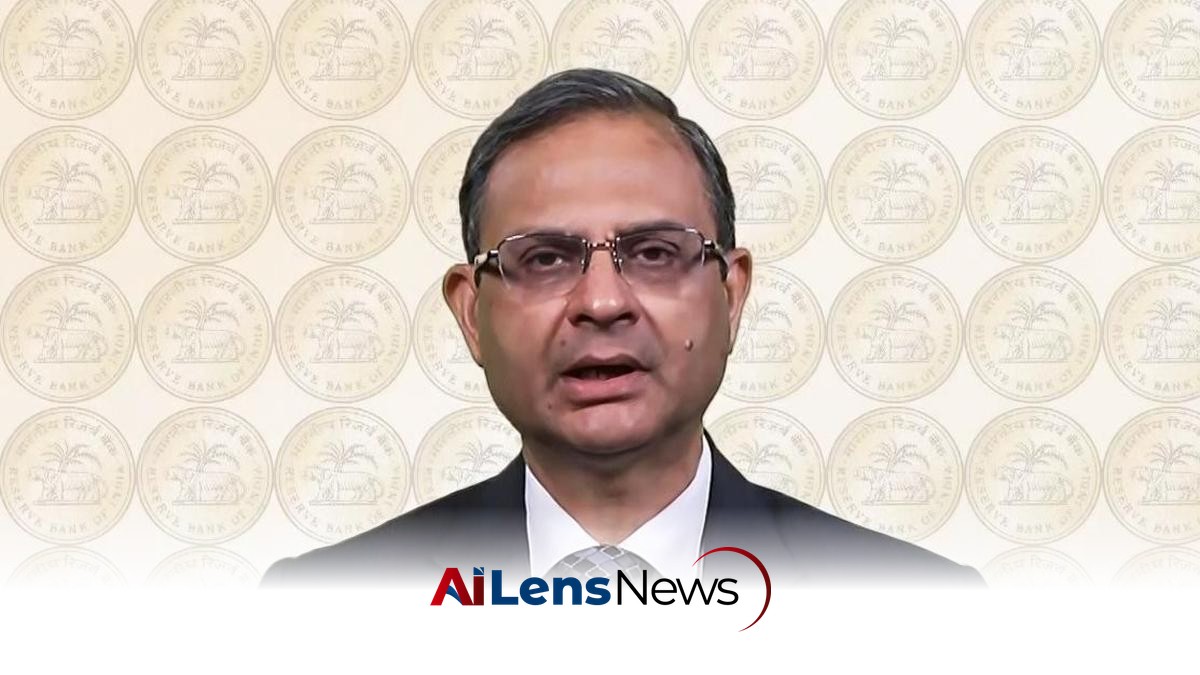


RBI Governor Sanjay Malhotra warns that the West Asia crisis and potential weak monsoon could impact India's economic growth, despite strong GDP forecasts.
New Delhi, India Jul 19, 2026 ALN: The Reserve Bank of India (RBI) Governor Sanjay Malhotra has recently articulated significant concerns regarding the potential ramifications of the ongoing crisis in West Asia and the anticipated weak monsoon season on India’s economic trajectory. In an interview, he underscored that these external and internal factors could pose considerable risks to the nation’s economic growth, despite India experiencing a robust growth rate of over 7% in recent years.
In his remarks, Malhotra highlighted that India recorded a commendable growth rate of 7.7% in the last financial year, a figure supported by the country's strong macroeconomic fundamentals. This growth, however, is now being threatened by various global uncertainties, particularly the geopolitical tensions in West Asia, which have historically had ripple effects on global markets, oil prices, and trade dynamics.
The RBI has projected a GDP growth rate of 6.6% for the current financial year, a downward adjustment that reflects the bank's acknowledgment of the multifaceted challenges that lie ahead. This projection indicates a cautious approach, as the central bank prepares to navigate through turbulent waters that could affect not only growth but also inflation and overall economic stability.
West Asia Conflict and Economic Stability
Malhotra pointed out that while India's monetary and fiscal policies remain robust, contributing positively to the high GDP growth, inflation continues to be a significant concern. The RBI has raised its inflation forecast to 5.1% for FY27, a notable increase from an earlier estimate of 4.6%. This adjustment underscores the central bank's vigilance in monitoring inflationary pressures that are exacerbated by supply-side factors.
In June, inflation rates surpassed the RBI's median target of 4%, primarily driven by rising food prices. Retail inflation surged to 4.38% in June from 3.93% in May, with food inflation climbing to 5.32% from 4.78% in the previous month. This increase in food prices is particularly concerning given that a significant portion of the Indian population relies on agriculture, which is heavily influenced by monsoon patterns.
Monsoon's Impact on Agriculture
The monsoon season is critical for India, especially for the agricultural sector, which contributes approximately 17% to the country's GDP. Malhotra emphasized the need for vigilance regarding monsoon conditions, as erratic weather patterns could severely impact agricultural productivity and, by extension, the overall economy. The reliance on monsoon rains makes the agricultural sector particularly vulnerable to climate variability, which can lead to fluctuations in crop yields and food prices.
Furthermore, the agricultural sector's performance has direct implications for rural income levels, consumer spending, and inflation. If the monsoon is weak, it could lead to lower agricultural output, resulting in higher food prices and increased inflationary pressures, which would challenge the RBI’s inflation control measures.
On the topic of currency performance, Malhotra noted that the Indian rupee has maintained stability against its peers, despite the strengthening of the dollar and heightened global uncertainty following the conflict in West Asia. He remarked, "After the war in West Asia, the dollar has strengthened, and many countries' currencies have weakened. From a global perspective, India's rupee situation can be considered normal." This stability is crucial as it helps maintain investor confidence and supports trade dynamics.
Last year, India achieved a record gross Foreign Direct Investment (FDI) of around $95 billion, showcasing the country’s attractiveness to foreign investors. The net foreign direct investment in the first two months of the current financial year reached approximately $7 billion, indicating continued investor interest despite the prevailing uncertainties. Malhotra reassured stakeholders that in the medium and long term, India's balance of payments and external sector would remain strong, alleviating concerns about economic stability.
Prioritizing Inflation Control
In his comments, the RBI Governor reiterated that controlling inflation remains the central bank's primary objective under its flexible inflation-targeting framework. He made it clear that while supporting economic growth is also important, it is secondary to the need for inflation control. He stated, "They are not in opposition; they support each other." This statement reflects a balanced approach to monetary policy, where the RBI seeks to ensure price stability while fostering economic growth.
Regarding loan growth, Malhotra reported that credit growth is broad-based across sectors, with overall bank credit growing around 18% year-on-year in June, compared to 17.5% in May. This growth in credit is a positive sign for economic activity, indicating that es and consumers are seeking loans to invest and spend, which can further stimulate economic growth.
Embracing Technology in Banking
On the topic of technological advancements, Malhotra mentioned that the RBI encourages banks to adopt artificial intelligence (AI) to enhance customer service, reduce operating costs, and improve decision-making processes. The integration of AI and other advanced technologies into banking operations is seen as a way to modernize the sector, making it more efficient and customer-friendly. However, he also stressed the importance of ensuring safeguards against cybersecurity and data privacy risks, as the increased reliance on technology can expose financial institutions to new vulnerabilities.
Earlier this week, Malhotra urged managing directors and chief executive officers of public and select private sector banks to leverage advanced technologies, including AI, to expand their reach while maintaining robust cybersecurity measures against fraud and data misuse. This call to action reflects a growing recognition of the need for the banking sector to innovate while simultaneously protecting the integrity of financial systems.
In conclusion, the RBI Governor's remarks serve as a reminder of the complex interplay between global events, domestic economic conditions, and the need for vigilant monetary policy. As India navigates these challenges, the focus on inflation control, agricultural stability, and technological advancement will be crucial for sustaining economic growth in an increasingly uncertain world.
To learn more about the latest developments in Corporate & Industry Insights, stay updated with our exclusive reports and analyses on AiLensNews.

