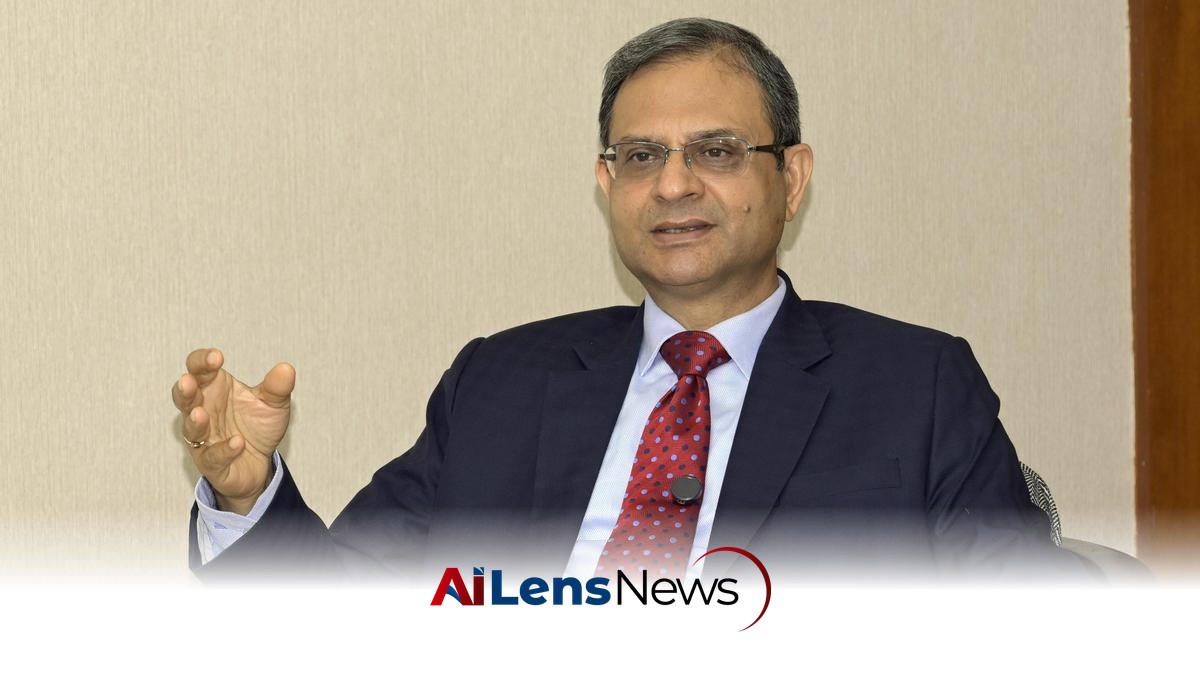


RBI Governor Sanjay Malhotra emphasizes the rupee's undervaluation as FCNR(B) deposits exceed $32 billion, bolstering India's external financial stability.
New Delhi, India Jul 27, 2026 ALN: The Reserve Bank of India (RBI) has recently made headlines with its proactive measures aimed at attracting foreign capital, and the results are proving to be significant. According to RBI Governor Sanjay Malhotra, banks have successfully mobilized nearly $32 billion through Foreign Currency Non-Resident (Bank) or FCNR(B) deposits. Additionally, the inflow of foreign investments into government securities has exceeded $7 billion since the implementation of policy measures in June. These developments reflect a strong investor response to the RBI's initiatives, which are designed to bolster India's financial stability and enhance its external position.
In an interview with The Line, Governor Malhotra addressed concerns regarding the nature of these inflows, particularly the fear that they might simply represent a recycling of existing deposits rather than new investments. He asserted that the RBI has the necessary tools to manage any resulting liquidity issues and emphasized that the inflows have fortified India’s external standing, especially amid a backdrop of geopolitical uncertainty and fluctuating global capital flows.
One of the critical aspects of the RBI's strategy involves the management of hedging costs associated with the new FCNR(B) deposits and the provision of concessional foreign exchange swaps for external commercial borrowings (ECBs) made by public sector entities. Governor Malhotra sought to alleviate concerns over these measures by stating, “It is not something which should be a matter of concern because we have a foolproof system of insuring ourselves.” He explained that any excess foreign currency received is strategically invested in foreign assets, thereby mitigating risk and ensuring stability.
Governor Malhotra urged stakeholders to contextualize these measures against the challenging global environment that emerging markets are currently facing. He is confident that these initiatives will further strengthen India’s balance of payments and contribute to currency stability. His remarks come at a time when many emerging economies are grappling with various external pressures, making India's proactive stance particularly noteworthy.
Amid discussions about the rupee's performance, Governor Malhotra reassured markets that the recent depreciation of the currency does not indicate any underlying weaknesses in India’s economic fundamentals. He attributed the pressure on the rupee to geopolitical tensions, the strength of the US dollar, and broader volatility affecting emerging markets. In response to queries about the RBI's approach to managing the exchange rate, he stated, “We do not target any specific exchange rate or band for the rupee. Our intervention, whenever necessary, is targeted to curb excessive volatility.” He further characterized the rupee as “not overvalued” and even suggested that it might be considered undervalued when assessed through both nominal and real effective exchange rate metrics.
To support his assertions regarding the strength of India’s external sector, Governor Malhotra highlighted several indicators, including the current account surplus recorded during April and May, robust services exports, resilient remittance inflows, increasing merchandise exports, and improving foreign direct investment (FDI) flows. These metrics collectively paint a positive picture of India’s economic landscape, reinforcing the notion that the country remains an attractive destination for foreign investment.
In terms of forex reserve management, Governor Malhotra emphasized that the RBI adheres to principles of safety, liquidity, and returns. He noted that the central bank regularly reviews its reserve deployment strategies to ensure optimal management of its foreign exchange reserves. This prudent approach is crucial for maintaining stability in the face of global financial uncertainties.
Turning to monetary policy, the Governor reiterated that controlling inflation remains the RBI's primary objective, even as the bank remains cognizant of potential growth risks. He indicated that the Monetary Policy Committee (MPC) will continue to adopt a data-dependent approach while navigating the complex trade-off between growth and inflation. “Our primary mandate is inflation and price stability. Therefore, we will do whatever is required first, to keep price stability and then, to see to what extent we can support growth,” he stated, underlining the RBI's commitment to maintaining economic equilibrium.
Despite inflation moving above the 4% midpoint of the MPC’s target band, Governor Malhotra suggested that policymakers do not yet perceive signs of entrenched broad-based price pressures. This observation provides a sense of reassurance as it indicates that while inflationary challenges exist, they may not be indicative of a long-term trend that could destabilize the economy.
Regarding the current policy rate, Governor Malhotra defended the RBI's stance, asserting that it accurately reflects the prevailing dynamics of growth and inflation, as well as the elevated uncertainties present in the global economic landscape. He described the MPC’s neutral stance as offering the flexibility to either maintain the status quo or adjust rates in response to incoming data, emphasizing that decisions will be guided primarily by domestic economic conditions rather than the actions of global central banks.
In addressing concerns about potential overheating due to strong credit growth, Governor Malhotra argued that the process of credit creation inherently generates deposits. He reassured stakeholders that key constraints on lending, such as capital adequacy, liquidity coverage, and stable funding ratios, remain well-managed within Indian banks. This indicates a robust banking sector that is well-positioned to support economic growth without risking overheating.
On governance issues, Governor Malhotra expressed confidence in the RBI’s regulatory and supervisory framework, which he described as robust. He noted that the growing foreign interest in Indian banks and non-banking financial companies (NBFCs) is a testament to the confidence that international investors have in the country's financial system and its long-term growth prospects. He assured that ownership norms would continue to prioritize fit-and-proper criteria and promote diversified shareholding structures, which are essential for maintaining the integrity and stability of the financial sector.
In summary, the RBI's recent initiatives to attract foreign capital, coupled with its strategic management of the rupee and commitment to inflation control, reflect a comprehensive approach to fortifying India's economic resilience. As the global landscape continues to evolve, the RBI's proactive measures and vigilant oversight will play a crucial role in navigating the complexities of both domestic and international markets.
To learn more about the latest developments in Banking & Finance Tools, stay updated with our exclusive reports and analyses on AiLensNews.

