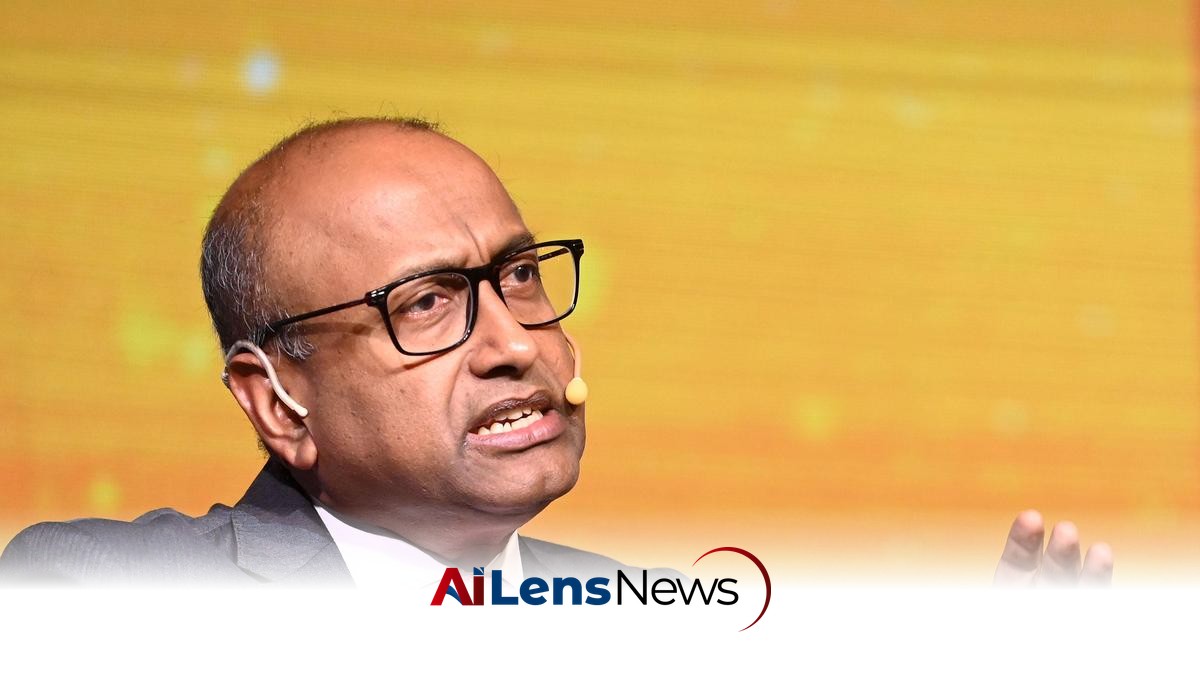


Rajesh Nambiar emphasizes the need for adaptable workforce strategies at the Nasscom People Summit, stressing the integration of AI with human ingenuity.
New Delhi, India Jul 15, 2026 ALN: The emergence of artificial intelligence (AI) has significantly altered the landscape of the workforce, prompting organizations to rethink their human resources strategies. Rajesh Nambiar, the president of the National Association of Software and Service Companies (Nasscom), recently emphasized the importance of this transformation during his address at the Nasscom People Summit held in Bengaluru. The summit, which took place on July 14, 2026, gathered numerous industry leaders and chief human resources officers to discuss the future of work in an era increasingly dominated by AI.
Nambiar pointed out that the human resources agenda has shifted from being a traditional back-office function to a critical priority within boardrooms. This change reflects a broader recognition that successful integration of AI with human capabilities is essential for organizational growth and resilience. The traditional linear planning models that have guided es for decades are becoming obsolete as organizations face rapid, non-linear disruptions that challenge long-term predictions and threaten the existence of conventional entry-level roles.
As AI continues to evolve, the implications for workforce development are profound. Nambiar highlighted the need for a cultural shift within organizations, advocating for a transition from a ‘know-it-all’ mindset to a ‘learn-it-all’ approach. This new paradigm emphasizes the importance of adaptability among employees, who must be prepared to pivot quickly to meet the demands of evolving job roles that may not yet exist. The ability to learn and adapt will be a critical factor in determining future organizational success.
According to Nambiar, the traditional corporate talent model is no longer viable in the face of rapid technological advancements. Companies must now focus on cultivating a workforce capable of agile learning and adaptability. This shift is particularly important as the adoption of AI tools accelerates, leading to significant changes in operational structures. Organizations that can effectively blend AI capabilities with human ingenuity will have a distinct competitive advantage in the marketplace.
Nambiar's comments underscore a broader trend in the corporate world, where the integration of AI is not merely about implementing new technologies but rather about rethinking how organizations operate. He stated, "The future market winners will not be the companies with the best predictive models, but those with the greatest organisational adaptability." This perspective highlights the necessity for companies to embed structural flexibility into their core operations, enabling them to respond swiftly to ongoing geopolitical and technological challenges.
One of the most significant implications of this shift is the potential disruption of traditional pathways for talent development. Nambiar noted that the historic campus-to-corporate pipelines, which have long served as essential training grounds for fresh graduates, may be rendered ineffective. As job roles become more dynamic and less predictable, the conventional methods of preparing young professionals for the workforce may need to be reevaluated and redesigned.
In conjunction with Nambiar's insights, a study released by Nasscom during the summit revealed promising statistics regarding AI proficiency among India's early-career technology talent. The report indicated that nearly 70% of this talent pool is AI-proficient, with approximately 23% qualifying as AI-native. This high level of proficiency suggests that young professionals in India are increasingly adept at integrating AI into their work processes, decision-making, and learning.
However, the study also identified areas for improvement, particularly in strengthening the foundational skills necessary for deep engineering expertise. Sangeeta Gupta, senior vice-president and chief strategy officer at Nasscom, emphasized the need for collaboration between academia and industry to ensure that the decline of routine work does not lead to a corresponding decline in deep engineering capabilities. She stated, "Academia must strengthen fundamentals, while industry must redesign onboarding and mentorship to ensure that the decline of routine work does not lead to a decline in deep engineering expertise." This call for collaboration highlights the importance of a holistic approach to talent development, where both educational institutions and es play a vital role in preparing the workforce for the future.
The report further indicated that over 90% of India’s early-career technology talent falls within the AI-Proficient or AI-Native categories. This positions India as a potential global hub for AI-native talent, a status that could have significant implications for the country’s economy and its role in the global technology landscape. As organizations worldwide seek to leverage AI for competitive advantage, India’s robust talent pool may become increasingly attractive to both domestic and international companies.
The findings of the Nasscom report suggest that there is a pressing need for a reimagining of talent development strategies. Strengthening foundational engineering capabilities, enhancing AI orchestration skills, and fostering independent problem-solving abilities will be essential components of building a truly AI-native workforce. This transformation will require a concerted effort from both educational institutions and industry leaders to ensure that the workforce is equipped to meet the challenges of a rapidly changing job market.
In conclusion, the insights shared by Rajesh Nambiar at the Nasscom People Summit serve as a clarion call for organizations to rethink their approach to human resources in the age of AI. The shift from traditional models to a focus on adaptability and continuous learning is not merely an option but a necessity for survival in an increasingly complex and uncertain environment. As companies navigate these changes, the collaboration between academia and industry will be crucial in developing a workforce that is not only proficient in AI but also capable of leveraging human ingenuity to drive innovation and growth.
To learn more about the latest developments in Corporate & Industry Insights, stay updated with our exclusive reports and analyses on AiLensNews.

