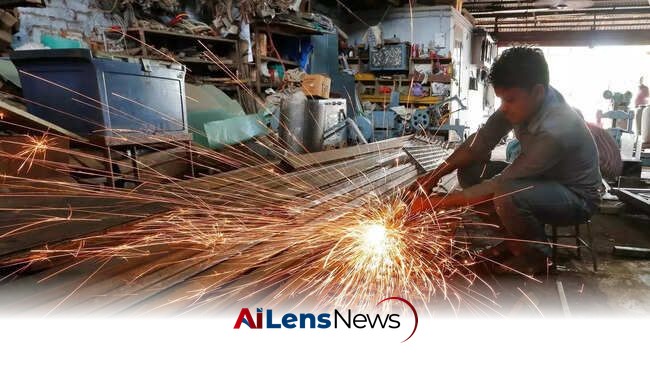


India's manufacturing growth has surpassed the global average, positioning it as an emerging leader. This rise is fueled by domestic demand and government initiatives like PLI schemes.
New Delhi, India Jul 7, 2026 ALN: India is strengthening its position as one of the world's leading manufacturing destinations, emerging as a major beneficiary of the global China Plus One strategy and the ongoing realignment of supply chains, according to a new study by the Associated Chambers of Commerce and Industry of India (ASSOCHAM). This strategy has gained traction as companies worldwide seek to diversify their manufacturing bases to mitigate risks associated with over-reliance on a single country, particularly China, which has been a dominant player in global manufacturing for decades.
The China Plus One strategy encourages companies to not only continue their operations in China but also to explore additional locations for their manufacturing needs. This shift is driven by various factors, including rising labor costs in China, supply chain disruptions experienced during the COVID-19 pandemic, and increasing geopolitical tensions. As a result, countries like India, Vietnam, and others in Southeast Asia have become attractive alternatives for foreign investors looking to diversify their manufacturing operations.
According to the ASSOCHAM report, India's average manufacturing growth rose from 3.44% in the pre-pandemic period (2016-19) to 4.15% in 2022-25. This marks a significant improvement, moving India's manufacturing growth from below the global average to nearly two percentage points above the world benchmark. The analysis, which covers the world's ten largest manufacturing economies, accounting for nearly 65% of global manufacturing output, found that India has emerged as one of the "Emerging Manufacturing Leaders" by significantly improving its manufacturing performance relative to the global average in the post-pandemic period.
Before the pandemic, only China, Mexico, and Russia recorded manufacturing growth above the global average. However, in the post-pandemic period, India joined the ranks of the United States, France, Germany, Italy, and the United Kingdom in outperforming the global benchmark. This shift illustrates a broader trend where countries are re-evaluating their manufacturing strategies and seeking to enhance their competitiveness on the global stage.
“The global manufacturing landscape is undergoing a gradual but important shift. Companies are no longer looking at efficiency alone; they are equally focused on resilience and diversification. India's improving manufacturing performance reflects the impact of sustained reforms and growing investor confidence,” stated Nirmal K Minda, President of ASSOCHAM. This sentiment underscores the importance of adaptability and resilience in manufacturing, which have become crucial in a rapidly changing global environment.
India's improved manufacturing performance has been driven by several key factors. Rising domestic demand has played a significant role, as the country’s growing middle class seeks a wider variety of goods. Additionally, infrastructure expansion has been a priority for the government, leading to improved logistics and supply chain efficiency. The government has also implemented various measures to attract foreign investments, including the Production Linked Incentive (PLI) schemes, which incentivize manufacturers to increase their production and create jobs.
Furthermore, industrial corridor projects and initiatives like PM Gati Shakti aim to streamline the movement of goods and services across the country, enhancing overall productivity. These efforts have created a more favorable environment for manufacturers, making India an increasingly attractive destination for global companies looking to set up operations.
Despite facing challenges such as higher input costs and geopolitical uncertainties, growth sentiment in India's manufacturing sector remained positive in the fourth quarter of FY26, according to the latest FICCI survey for the January-March period of FY26. The survey found that capacity utilization dipped slightly to nearly 72% from the previous quarter. However, manufacturers expressed optimism about investment over the next six months, indicating confidence in the sector's future prospects.
This optimism is reflected in India's overall performance, with the economy expanding by 7.7% in fiscal year 2025-26, up from 7.1% a year earlier. Growth in the January-March quarter stood at 7.8%, compared with 8% in the preceding quarter. Notably, the fourth-quarter figure exceeded the median estimate of 7.3% in a Bloomberg survey of economists and matched the pace recorded in the previous quarter. This robust growth provides a solid foundation for the manufacturing sector to thrive.
In conclusion, India's manufacturing sector is not only recovering but also thriving, positioning itself as a key player in the global market. The country's ability to attract foreign investments and adapt to changing global dynamics is crucial for its continued growth. With sustained reforms, strategic initiatives, and a focus on enhancing manufacturing capabilities, India is set to further solidify its place in the global manufacturing landscape. The implications of this growth extend beyond metrics; they include job creation, technology transfer, and increased competitiveness on the world stage, ultimately contributing to the broader goal of making India a global manufacturing hub.
This transition in the manufacturing landscape is not merely an shift but also a strategic repositioning for India. As companies reassess their supply chains, India is poised to play a pivotal role in the global economy. The diversification of manufacturing bases is not just about reducing dependency on China; it is also about leveraging India's demographic dividend, which includes a youthful workforce that is increasingly skilled and adaptable.
Furthermore, the Indian government has recognized the need for a conducive business environment. Initiatives such as the "Make in India" campaign aim to foster innovation, enhance skill development, and promote sustainable manufacturing practices. By focusing on these areas, India seeks to attract not only foreign direct investment (FDI) but also to nurture homegrown enterprises that can compete on a global scale.
In addition to the benefits, the growth of the manufacturing sector in India has social implications as well. Job creation in manufacturing can uplift millions from poverty, improve living standards, and contribute to the overall development of the country. As the sector grows, it can lead to the emergence of ancillary industries, further boosting employment and activity in related sectors.
Moreover, as India positions itself as a manufacturing hub, it also faces the challenge of ensuring sustainability. The global community is increasingly focused on environmental issues, and manufacturers are under pressure to adopt greener practices. India’s ability to balance growth with environmental sustainability will be crucial in maintaining its attractiveness as a manufacturing destination. The government and businesses must work together to implement practices that not only enhance productivity but also minimize environmental impact.
In summary, the China Plus One strategy has opened new avenues for India's manufacturing sector, allowing it to capitalize on global trends and emerging opportunities. As the country continues to strengthen its infrastructure, enhance its skill base, and create a favorable regulatory environment, it is well-positioned to become a significant player in the global manufacturing landscape. The ongoing reforms and strategic initiatives will not only facilitate growth but also contribute to India's long-term vision of becoming a global manufacturing powerhouse.
To learn more about the latest developments in Corporate & Industry Insights, stay updated with our exclusive reports and analyses on AiLensNews.

