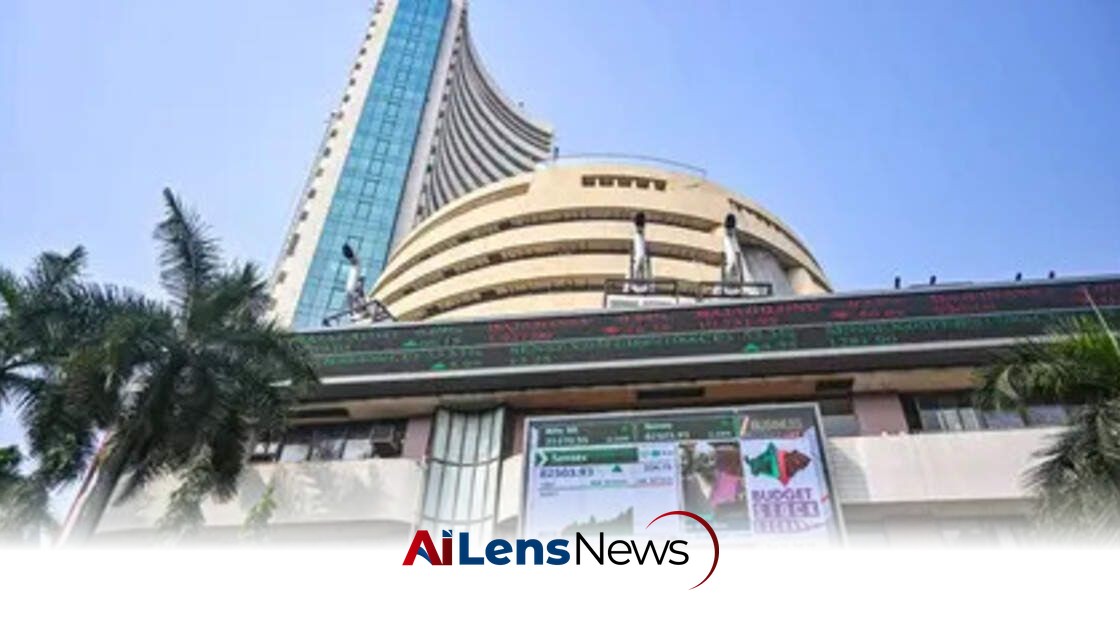


Indian equities saw slight gains on Wednesday, with Sensex and Nifty recovering from earlier losses. Geopolitical tensions and crude prices kept traders cautious.
New Delhi, India Jul 15, 2026 ALN: The Indian stock market exhibited a mixed performance on Wednesday, closing marginally higher despite significant intraday volatility. The benchmark indices, Sensex and Nifty, managed to record gains after a tumultuous trading session, which saw them erase most of their earlier advances. This fluctuation in the market reflects ongoing uncertainties and pressures affecting investor sentiment.
The Sensex, a key index representing 30 of the largest and most actively traded stocks on the Bombay Stock Exchange (BSE), rose by over 130 points to finish at 77,185. Meanwhile, the Nifty 50, which comprises 50 of the largest companies listed on the National Stock Exchange (NSE), gained over 26 points to close at 24,078. Despite these gains, the indices faced a significant pullback, with the Sensex dropping 461 points from its intraday high and the Nifty erasing most of its gains after reaching as high as 24,220 during the session.
In the backdrop of these movements, the India VIX, a volatility index that measures the market's expectation of volatility in the near term, decreased by more than 3% to settle at 13.27. A lower VIX typically indicates a calmer market environment, though the day's trading suggested a more complex narrative of investor anxiety and cautious optimism. The interplay of various factors, including global conditions, domestic policy changes, and sector-specific developments, continues to shape the market landscape.
In terms of sector performance, some companies managed to shine amidst the volatility. The top gainers on the Nifty included:
On the Sensex, the top performers were:
Conversely, several stocks faced downward pressure, leading to notable losses. The top losers on the Nifty were:
Similarly, the top losers on the Sensex included:
Looking ahead, the near-term outlook for Indian equities appears to be mixed, as articulated by Siddhartha Khemka, Head of Research at Wealth Management at Motilal Oswal Financial Services. He highlighted several external factors contributing to market volatility, including heightened geopolitical tensions in West Asia, which have historically influenced oil prices and market sentiment. Currently, Brent crude oil prices are hovering above $85 per barrel, a level that often impacts inflation and growth projections. The fluctuation in oil prices can lead to increased costs for various sectors, particularly transportation and manufacturing, and can also affect consumer spending patterns.
Additionally, the Indian rupee has weakened to a one-month low of approximately Rs 96.4 per US dollar. A depreciating currency can increase the cost of imports and put pressure on domestic companies that rely on foreign goods and services, potentially leading to reduced profit margins. This scenario can create a ripple effect throughout the economy, influencing consumer spending and investment decisions. A weaker rupee may also affect foreign investments as investors may seek more stable currencies for their investments, potentially leading to capital outflows.
Despite these challenges, Khemka noted that the ongoing Q1 FY27 earnings season could provide critical support to the market through stock-specific movements. Investors are keenly focused on upcoming earnings reports from major companies, including Wipro, Tech Mahindra, Polycab, Piramal Finance, Jio Financial Services, ITC Hotels, Paytm, and BHEL, all of which are scheduled to report on Thursday. These earnings releases are significant as they can provide insights into the health of various sectors and the overall economy. Positive earnings surprises may bolster investor confidence and lead to a more stable market environment, while disappointing results could exacerbate existing concerns.
From a technical perspective, the Nifty index exhibited high volatility during the trading session, closing slightly higher while forming a doji candle with a long upper shadow. This pattern indicates selling pressure at higher levels, particularly in the context of elevated crude oil prices, which have been a concern for investors. According to Bajaj Broking, the Nifty is expected to continue its recent consolidation phase, trading within a range of 23,800 to 24,350. This range-bound movement suggests that investors are cautious and are waiting for clearer signals before making substantial commitments.
Within this consolidation, last Friday’s gap area and Monday's low of 24,000-23,950 are seen as immediate support levels. Holding above these levels could lead to a pullback towards the upper band of the recent consolidation range, specifically targeting 24,250 to 24,350. Conversely, short-term support is identified at 23,800 to 23,900, coinciding with the nearly identical lows observed over the past four weeks and the 50-day Exponential Moving Average (EMA). A breakout above 24,350 would signal strength and potentially open up upside towards 24,600, which represents the high of April 2026. This technical analysis highlights the importance of monitoring market trends and patterns to make informed investment decisions.
Investors are advised to remain vigilant and consider these technical indicators alongside broader factors as they navigate the current market landscape. The interplay of international events, domestic indicators, and corporate earnings will likely shape market performance in the coming weeks. As the global environment continues to evolve, with potential interest rate changes and inflationary pressures, Indian will need to adapt to these influences.
In conclusion, while the Indian stock market showed resilience by closing higher amidst volatility, the underlying factors contributing to market fluctuations remain significant. Investors are encouraged to stay informed and adopt a strategic approach to their investments, considering both the technical aspects and the broader context that could impact market performance in the near future.
(Disclaimer: Recommendations, suggestions, views, and opinions given by the experts are their own. These do not represent the views of the publication.)
To learn more about the latest developments in Markets, stay updated with our exclusive reports and analyses on AiLensNews.

