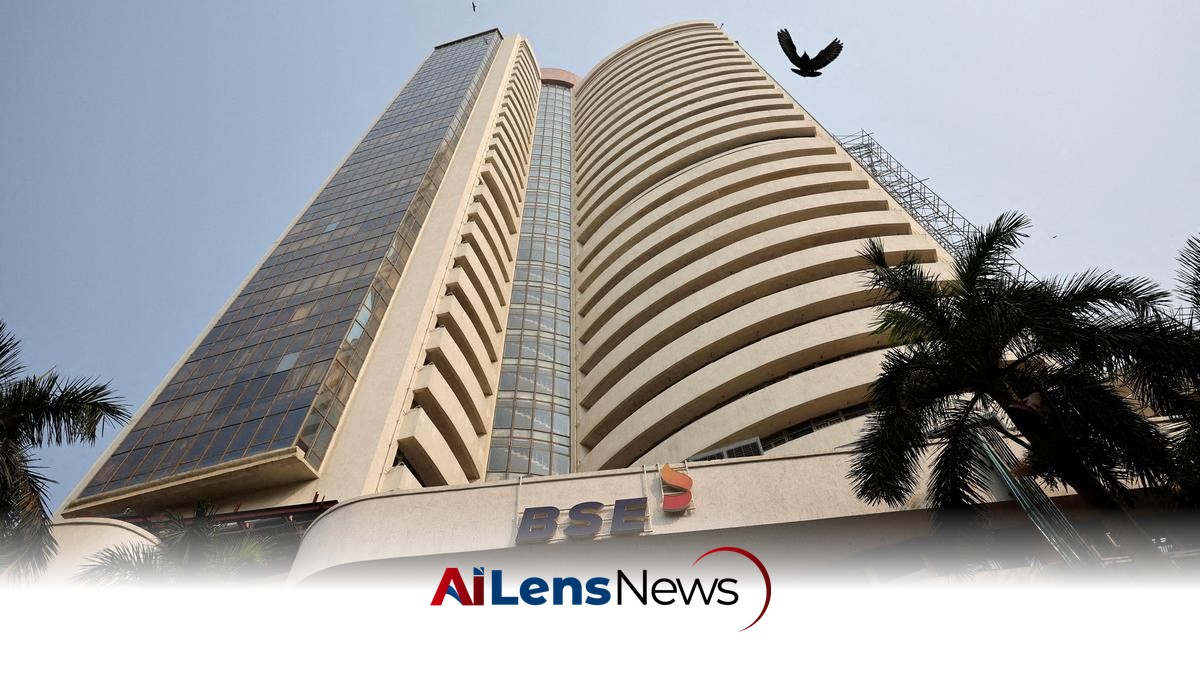


Indian stock markets faced significant losses due to rising oil prices and foreign fund outflows, with the Sensex dropping over 550 points.
New Delhi, India Jul 14, 2026 ALN: Market benchmark indices, the Sensex and Nifty, experienced a notable decline in early trading on Tuesday, July 14, 2026. This downturn was primarily influenced by a significant surge in crude oil prices, which has been attributed to escalating tensions in West Asia. The geopolitical landscape in this region has been historically volatile, with various conflicts impacting global oil supply and prices. Recent developments, particularly the ongoing U.S. military actions against Iran, have reignited concerns over stability in the oil markets, leading to a rapid increase in crude oil prices.
The rise in crude oil prices is not just a localized issue; it has far-reaching implications for economies around the world, particularly those that are heavily reliant on oil imports, such as India. The Indian economy has been grappling with high inflation rates, and the surge in oil prices is likely to exacerbate these challenges. Rising oil prices can lead to increased transportation and production costs, which may be passed on to consumers in the form of higher prices for goods and services. This inflationary pressure can significantly affect the purchasing power of consumers, leading to decreased consumption and, consequently, slower economic growth.
As a result, the 30-share BSE Sensex fell by 552.99 points, bringing it down to 77,063.41, while the 50-share NSE Nifty dropped 160.45 points, settling at 24,050.55. Such sharp declines in indices are often indicative of broader market sentiments and can trigger a wave of selling as investors react to the negative news. The significant drop in these indices reflects a loss of investor confidence, which is often a precursor to further declines unless there is a reversal in market sentiment or external factors.
Among the stocks that contributed to the Sensex's decline were InterGlobe Aviation, HCL Tech, Bajaj Finance, Mahindra & Mahindra, UltraTech Cement, and Larsen & Toubro, all of which faced significant selling pressure. These companies represent key sectors of the Indian economy, and their decline can have a cascading effect on related industries and the overall market. In contrast, there were a few stocks that managed to gain amidst the downturn, including Bharti Airtel, Tata Consultancy Services, Adani Ports, and Tata Steel, which were among the few winners in a largely negative market environment. This divergence in stock performance highlights the selective nature of market reactions, where investors may seek refuge in more stable or defensive stocks during periods of uncertainty.
The surge in Brent Crude prices, which rose by 1.63% to reach $84.60 per barrel, is a critical factor influencing market dynamics. Oil prices are a key component of the Indian economy, affecting inflation rates, trade balances, and overall economic growth. V.K. Vijayakumar, Chief Investment Strategist at Geojit Investments Limited, remarked on the situation, noting that the escalation of the U.S.-Iran conflict has significant implications for the Indian market. He indicated that if the spike in oil prices continues, it could adversely affect India's macroeconomic environment, which is already grappling with various challenges. The interplay between geopolitical tensions and economic fundamentals is crucial in understanding the market's trajectory.
The implications of rising oil prices are multifaceted. For one, higher oil prices can lead to increased transportation and production costs, which may be passed on to consumers in the form of higher prices for goods and services. This can contribute to inflationary pressures, which are particularly concerning for an economy like India, where inflation has been a persistent issue. Furthermore, as India is a net importer of oil, rising prices can worsen the trade deficit, putting additional pressure on the Indian rupee. A weaker rupee can further complicate the situation, as it makes imports more expensive and can lead to a vicious cycle of inflation.
In the broader context of global markets, Asian indices mirrored the negative sentiment, with South Korea's Kospi trading down by 3.71%. Other major indices, including Japan's Nikkei 225, Shanghai's SSE Composite index, and Hong Kong's Hang Seng index, also reported declines. This trend reflects a global risk-off sentiment, where investors tend to sell off equities in favor of safer assets during periods of geopolitical uncertainty. Such a trend can lead to increased volatility in emerging markets like India, where foreign institutional investors (FIIs) play a significant role in determining market direction.
The U.S. markets also closed in negative territory on Monday, July 13, 2026, further contributing to the bearish outlook in global markets. This negative sentiment can lead to increased volatility as investors reassess their positions in light of new information. On the same day, FIIs offloaded equities worth ₹3,062.27 crore, indicating a retreat from the Indian market. This outflow of foreign capital can exacerbate market declines, as domestic investors may react to the perceived loss of confidence from foreign investors. The role of FIIs is crucial in understanding market movements, as their investment decisions can significantly influence liquidity and market stability.
Interestingly, the day before, on Monday, the Sensex had managed to gain a modest 47.01 points, or 0.06%, closing at 77,616.40, while the Nifty saw a slight increase of 4.10 points, or 0.02%, ending at 24,211. Such fluctuations highlight the volatility and rapid changes in market sentiment that can occur in response to geopolitical events and economic data. The market's ability to swing dramatically in short periods is a characteristic of the current environment, where investor sentiment is heavily influenced by external factors.
In summary, the Indian markets are currently facing significant challenges due to the interplay of rising oil prices, foreign fund outflows, and negative trends in global indices. The situation in West Asia, particularly the U.S.-Iran conflict, continues to be a critical factor influencing market dynamics. As investors and analysts closely monitor these developments, the potential for further market volatility remains high, with implications for both domestic and international economic conditions. The coming days will likely be pivotal in determining the trajectory of the Indian markets, as the interplay of geopolitical tensions and economic fundamentals unfolds. Investors are advised to remain vigilant, as shifts in the geopolitical landscape can lead to rapid changes in market conditions, affecting investment strategies and economic forecasts.
To learn more about the latest developments in Markets, stay updated with our exclusive reports and analyses on AiLensNews.

