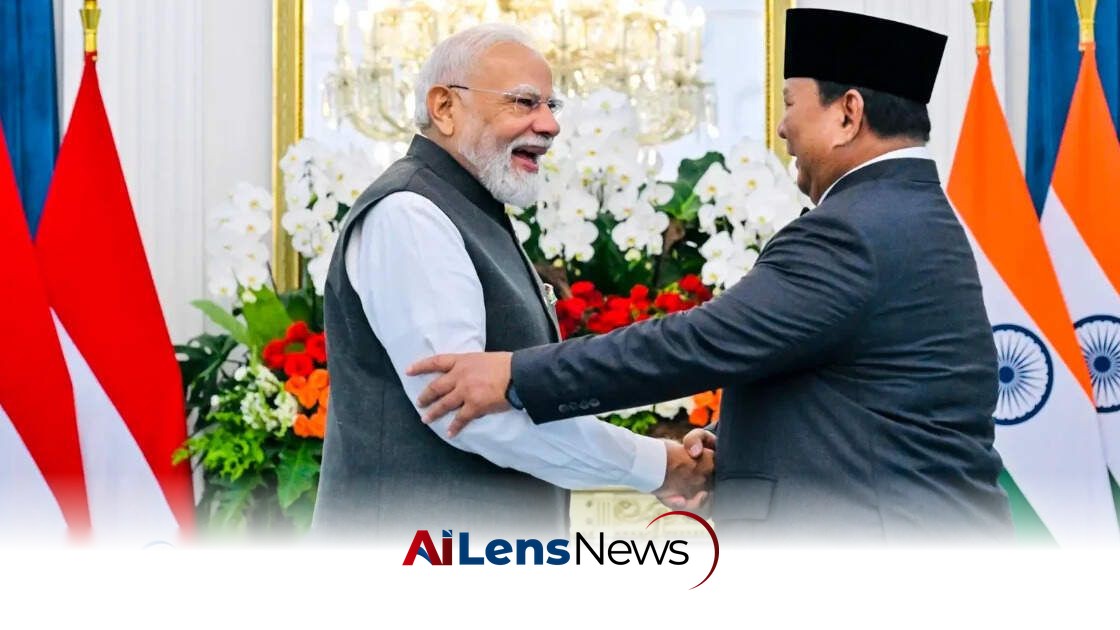


Prime Minister Narendra Modi addressed the Indonesian Parliament, highlighting India's commitment to development and the strengthening of bilateral ties.
New Delhi, India Jul 7, 2026 ALN: Prime Minister Narendra Modi on Tuesday described India as a country that believes in "development, not expansionism" as he addressed the Indonesian Parliament, pitching the India-Indonesia partnership as one that will be defined by shared growth, democratic values, and a common civilizational heritage. This statement reflects a broader narrative that India is attempting to establish on the global stage, positioning itself as a responsible regional power that seeks to foster cooperation rather than conflict.
In his address to lawmakers, the prime minister emphasized that India and Indonesia are entering a pivotal phase in their bilateral relationship, suggesting that the next 25 years will be crucial for both nations. "The first quarter of this century has already passed, and the next 25 years will be extremely significant for both our countries. Today, on the great soil of Indonesia, I have come before you with confidence in the shared development and progress of our two nations," he stated. This assertion underscores the importance of long-term strategic planning in international relations, particularly in a region that is experiencing rapid and geopolitical changes.
During his visit, Prime Minister Modi was conferred with Indonesia's highest civilian honour, a significant recognition that he accepted on behalf of 1.4 billion Indians. "I humbly and wholeheartedly accept this affection shown by the people of Indonesia on behalf of millions of Indians. This honour is a tribute to the democratic values of both our nations, our shared heritage, and the strengthening ties between our two countries," he remarked. This moment highlights the deep-rooted diplomatic ties between India and Indonesia, which have been historically characterized by mutual respect and shared cultural connections.
Opening his address, PM Modi expressed gratitude to the Indonesian leadership and people for the warm reception he received in Jakarta, calling it one of the most memorable days of his life. Representing "140 crore Indians" and describing India as the "Mother of Democracy," he conveyed greetings to the Indonesian people and praised the warmth extended to him by citizens, especially children, youth, and women. Such gestures are crucial in diplomacy, as they foster goodwill and strengthen interpersonal connections between nations.
In a light-hearted moment, the prime minister referred to remarks by Indonesian President Prabowo Subianto, saying, "No one holds the key to this love, this affection, this friendship and this spirit of respect," which drew applause from members of Parliament. This exchange illustrates the personal rapport between the leaders, which can often play a pivotal role in enhancing bilateral relations.
Earlier in the day, PM Modi and Indonesian President Prabowo Subianto held wide-ranging bilateral talks, resulting in the signing of more than eight agreements across various sectors, including defence, technology, health, education, telecommunications, agriculture, and critical minerals. This comprehensive approach aims to deepen the strategic partnership between the two countries, reflecting a shared vision for regional stability and prosperity.
The centrepiece of the agreements was the long-awaited deal for the supply of BrahMos missiles to Indonesia, which marks a significant step in India's growing network of coastal missile partnerships across Southeast Asia. This deal not only strengthens Indonesia's defence capabilities but also positions India as a key player in regional security dynamics. The BrahMos missile, developed jointly by India and Russia, is known for its speed and precision, making it a valuable asset for any military.
Additionally, the two sides signed an agreement for the supply of India's Astra air-to-air missile system to the Indonesian military under a pact between Bharat Dynamics Limited and the Republic Corps. This agreement further cements India's role as a provider of advanced military technology in the region, enhancing bilateral defence cooperation.
The leaders also finalized a framework for maritime safety and security cooperation, recognizing the strategic importance of maritime routes in Southeast Asia. With both nations having extensive coastlines and significant maritime interests, this agreement aims to enhance collaborative efforts in ensuring safe navigation and addressing maritime challenges.
Moreover, the two countries agreed to strengthen supply chains for critical minerals and steel, which are essential for various industries, including technology and manufacturing. This cooperation is particularly important in the context of global supply chain disruptions and the increasing demand for sustainable and secure sources of raw materials.
In a move aimed at facilitating cross-border transactions and travel, the leaders decided to integrate India's Unified Payments Interface (UPI) with Indonesia's digital payment system. This integration is expected to simplify financial transactions for businesses and tourists alike, promoting ties and people-to-people connections.
Other agreements covered diverse areas such as disaster management, healthcare workforce collaboration, telecommunications, regulation of medical products, agriculture, election management and technology, research and innovation, as well as the conservation and restoration of the Prambanan Temple complex. The Election Commissions of both countries also signed a Memorandum of Understanding (MoU) to enhance democratic cooperation, highlighting the importance of shared democratic values in their bilateral relationship.
Furthermore, the two sides announced the establishment of an overseas campus of the Indian Institute of Management Bangalore at Indonesia's Singhasari Special Zone in East Java. This initiative aims to serve students from across the ASEAN region, promoting educational exchange and capacity building, which are vital for fostering long-term partnerships.
In conclusion, PM Modi's visit marks a significant step in enhancing the India-Indonesia relationship, focusing on mutual growth and cooperation across various sectors. As both nations navigate the complexities of a rapidly changing global landscape, their partnership is likely to play a crucial role in regional stability and prosperity. The agreements signed during this visit reflect a commitment to deepening ties and addressing shared challenges, paving the way for a more collaborative future.
To learn more about the latest developments in Corporate & Industry Insights, stay updated with our exclusive reports and analyses on AiLensNews.

