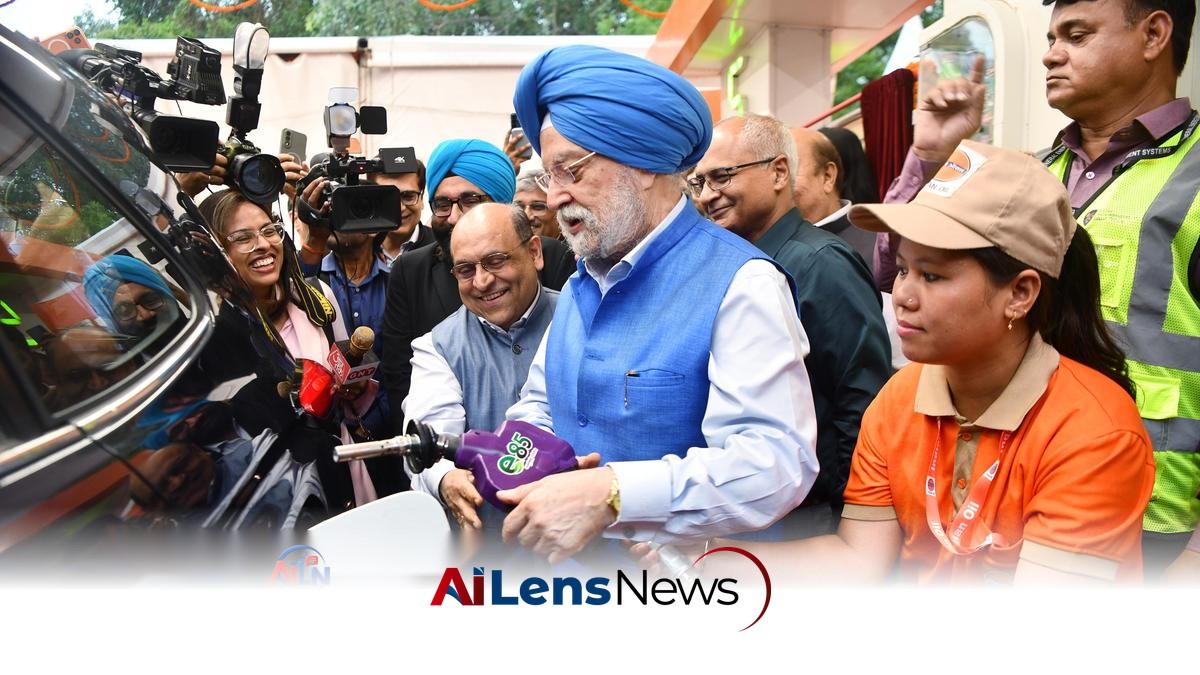


The Petroleum Ministry asserts that ethanol blending in petrol is safe, backed by extensive trials, despite ongoing public concerns and political opposition from Kejriwal.
New Delhi, India Jul 4, 2026 ALN: Amid ongoing concerns regarding the safety of petrol blended with ethanol, the Petroleum Ministry has issued a detailed note defending the practice. The note, released on July 2, 2026, addresses fears that ethanol blending could corrode engine parts and lead to a significant drop in mileage. The Ministry emphasized that the blending process is supported by extensive field trials and adheres to best practices observed in other countries.
Despite these clarifications, public apprehensions continue to circulate on social media, with many posts claiming that the one-fifth ethanol blended petrol is harmful to engines and affects fuel efficiency. The rise of social media as a platform for public discourse has amplified these concerns, with users sharing personal anecdotes of vehicle issues purportedly linked to ethanol blending.
The government’s note highlighted that the Automotive Research Institute of India (ARAI), in collaboration with the Indian Institute of Petroleum (Dehradun), the Society of Automobile Manufacturers (SIAM), and Indian Oil, conducted studies to evaluate material compatibility and emission performance with a 20% ethanol blend back in 2014. These studies were part of a broader initiative to assess the viability of alternative fuels and reduce dependency on fossil fuels.
Officially launched in February 2023, the petrol containing a 20% ethanol blend was achieved in December 2025. The Ministry reported that “no issues were reported in most parameters including drivability, startability, metal compatibility, and plastic compatibility” during the trials. This assertion is significant as it aims to reassure consumers that the government is not only prioritizing environmental sustainability but also ensuring that vehicle performance remains uncompromised.
Furthermore, it noted that only a marginal decline in performance was observed in vehicles running on ten-percent blended petrol compared to regular petrol. The extensive field trials included 40,000 kilometers for cars and 20,000 kilometers for two-wheelers, which did not reveal any significant negative effects. These trials were crucial in establishing a scientific basis for the blending policy, as they involved a diverse range of vehicles and operating conditions.
The Ministry reiterated that ethanol’s “exceptionally high-octane number” makes it a desirable fuel for high-performance internal combustion engines. It pointed out that ethanol and ethanol-based fuels have historically been used in various sports cars due to their superior anti-knock characteristics, higher power potential, and cooling effect derived from their high latent heat of vaporization. This positions ethanol as not just an alternative but a potentially superior fuel for certain applications, which could appeal to performance-oriented consumers.
In comparison to other countries, the Ministry stated that India’s blending program is “consistent with international best practices.” It cited examples of similar blending practices in Japan, Canada, and the U.S., as well as a 27% blending rate in Brazil. The Brazilian experience is particularly notable, as it has successfully integrated ethanol into its fuel supply for decades, resulting in reduced greenhouse gas emissions and enhanced energy security. The program has reportedly helped substitute 310 lakh metric tonnes of crude oil, expedited payments exceeding ₹1.6 lakh crore to farmers, and saved over ₹1.9 lakh crore in foreign exchange. These economic benefits are positioned as a key argument in favor of the blending policy, suggesting that it serves not only environmental goals but also economic ones.
In response to the government's stance, Arvind Kejriwal, the chief of the Aam Aadmi Party (AAP), announced via social media that he would be writing to Prime Minister Narendra Modi regarding the issue. Kejriwal accused the government of treating the country as an “experiment lab” and claimed that the forced imposition of blended fuel is causing vehicle breakdowns and damaging parts, leading to public outrage. His comments reflect a growing sentiment among some political factions that the government is prioritizing policy over the practical realities faced by consumers.
“Due to the ethanol-blended petrol, vehicles are breaking down, parts are getting damaged, and mileage is dropping. People are very angry,” he stated, inviting the public to share their thoughts for inclusion in his letter to the Prime Minister. This grassroots engagement strategy aims to mobilize public sentiment against the blending policy, potentially influencing broader political discourse.
Additionally, political commentator Tehseen Poonawalla has called for a protest against the government’s ethanol blending policy, urging the administration to end the mandatory 20% blending requirement and allow consumers the choice of fuel. This call to action highlights the growing divide between government policy and public sentiment, as well as the potential for organized opposition to influence future energy policies.
As the debate continues, the government remains firm in its position, advocating for the benefits of ethanol blending while facing mounting public and political scrutiny. The ongoing discourse around ethanol blending is not just a matter of fuel choice; it encapsulates broader issues related to energy independence, environmental sustainability, and consumer rights. The government’s challenge will be to balance these competing interests while maintaining public trust in its policies.
Furthermore, the implications of the ethanol blending policy extend beyond immediate consumer concerns. As global energy dynamics shift towards renewable sources, India’s approach to ethanol could serve as a model for other developing nations seeking to navigate the complexities of energy transition. The outcomes of this policy could influence future investments in renewable energy infrastructure, agricultural practices, and technological advancements in fuel production.
In summary, the ongoing defense of ethanol blending by the Petroleum Ministry highlights the intersection of environmental policy, economic considerations, and public sentiment. As stakeholders from various sectors weigh in on the issue, the government faces the task of addressing legitimate consumer concerns while promoting a vision for a more sustainable energy future. The continued dialogue around ethanol blending may ultimately shape the trajectory of India’s energy landscape in the years to come.
To learn more about the latest developments in Corporate & Industry Insights, stay updated with our exclusive reports and analyses on AiLensNews.

