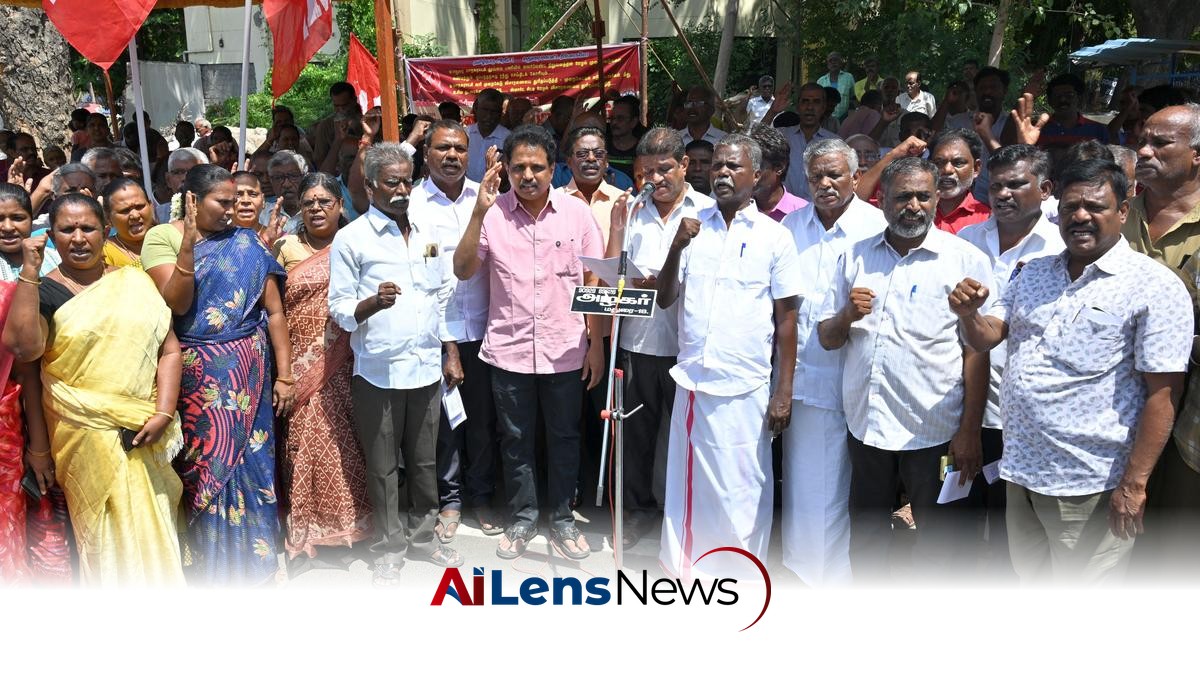


CPI(M) stages a protest in Madurai demanding the cancellation of Ourland's contract and an inquiry into corruption related to solid waste management.
New Delhi, India Jul 10, 2026 ALN: The Communist Party of India (Marxist), commonly referred to as CPI(M), has taken a firm stance against what they describe as significant irregularities within the Madurai Corporation, particularly concerning its solid waste management operations. On Thursday, party functionaries organized a protest to voice their concerns and demands regarding the management of sanitation services in the city.
The protest was primarily aimed at the contract held by ‘Ourland,’ a private company tasked with the responsibility of managing solid waste in Madurai. Protesters called for the immediate cancellation of this contract, arguing that privatization of essential services like waste management compromises public welfare and undermines workers' rights. This sentiment reflects a broader concern among various political and social groups regarding the increasing trend of privatization in public services, which they argue often leads to a decline in service quality and worker exploitation.
During the protest, hundreds of CPI(M) members gathered to express their dissatisfaction not only with the privatization of waste management but also to demand a thorough investigation into alleged corruption associated with property taxes within the Madurai Corporation. Additionally, they called for scrutiny into the implementation of Smart City projects, which have been criticized for their lack of transparency and accountability. The protesters insisted that strict action should be taken against individuals found guilty of fraudulent practices, highlighting the need for integrity in local governance.
Notably, the protest saw participation from prominent party leaders, including Madurai MP Su. Venkatesan. His involvement underscores the political significance of the issue at hand, as local governance and public service management have become critical topics in contemporary Indian politics. Venkatesan and other CPI(M) representatives articulated their belief that outsourcing public services to private entities is detrimental not just to the quality of service but also to the rights and livelihoods of workers engaged in these sectors. They accused ‘Ourland’ of exploiting its workforce by offering low wages and terminating employees without just cause, a practice that raises serious ethical and legal questions about labor rights in the region.
Madurai, a city with a rich historical and cultural heritage, has recently been ranked among the dirtiest cities in India, a status that has sparked outrage among residents and civic leaders alike. The CPI(M) protesters highlighted this troubling distinction as evidence of the failure of privatization in effectively managing sanitation services. They urged the Madurai Corporation to take direct control of sanitation operations, advocating for the appointment of permanent staff based on merit and eligibility criteria. This approach, they argued, would not only ensure job security and fair wages for workers but also improve the overall efficiency and effectiveness of waste management in the city.
The call for the Corporation to manage sanitation and other essential services directly reflects a growing public sentiment that believes certain services should remain in the hands of local governments rather than be transferred to private companies. Many argue that public entities are better positioned to prioritize citizens' needs and maintain accountability to the community. The CPI(M) protestors emphasized that essential services such as sanitation and the provision of drinking water should not be subject to the profit motives often associated with private enterprises.
In addition to the immediate concerns regarding waste management, the protest also highlighted broader issues related to governance and civic responsibility in Madurai. The allegations of corruption and mismanagement in the Corporation have raised questions about the effectiveness of local government in addressing the needs of its citizens. The CPI(M) has been vocal in its criticism of the current administration, asserting that the ongoing issues with waste management and other public services are symptomatic of deeper systemic problems within the governance framework of the city.
MP Su. Venkatesan reiterated the CPI(M)'s commitment to exposing irregularities and fraudulent practices associated with ‘Ourland’ and emphasized the importance of protecting the rights of sanitary workers. Sanitary workers, many of whom are affiliated with the Centre of Indian Trade Unions (CITU) and the VCK trade unions, have been at the forefront of ongoing protests against ‘Ourland,’ advocating for better working conditions and fair treatment. Their struggles reflect a larger narrative of labor rights in India, where many workers in the informal sector face significant challenges related to job security, wages, and working conditions.
The implications of these protests extend beyond immediate demands for better waste management practices. They raise critical questions about the role of privatization in public service delivery, the responsibilities of local governments, and the protection of workers' rights in an increasingly market-driven economy. As cities like Madurai grapple with the challenges of urbanization, population growth, and environmental sustainability, the outcomes of such protests could influence future policy decisions and the direction of public services in the region.
In conclusion, the CPI(M) protest against irregularities in the Madurai Corporation highlights a significant struggle over the management of essential public services and the rights of workers. As the debate over privatization versus public management continues, the voices of the protesters serve as a reminder of the need for accountability, transparency, and fairness in the governance of urban spaces. The situation in Madurai may serve as a case study for other cities facing similar challenges, prompting discussions on the best practices for ensuring public welfare and protecting the rights of workers in the evolving landscape of urban governance.
To learn more about the latest developments in Corporate & Industry Insights, stay updated with our exclusive reports and analyses on AiLensNews.

