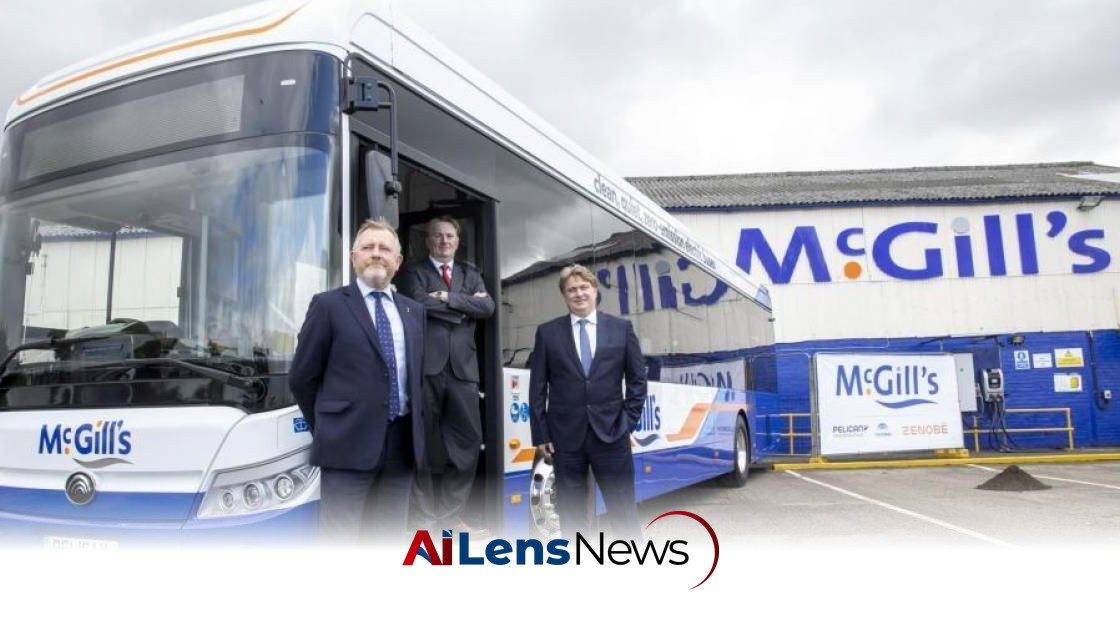


Bus operator McGill’s has initiated a multi-million pound legal challenge against the Scottish Government after being excluded from a funding scheme for electric buses.
London, United Kingdom Jul 12, 2026 ALN: Bus firm McGill’s has launched a "multi-million pound" legal action after being rejected as part of a Scottish Government scheme for electric buses. This development marks a significant turn in the ongoing discussions surrounding public transportation funding in Scotland, particularly in the context of the government's commitment to reducing emissions and promoting sustainable transport solutions.
In March, it was announced that the latest round of funding for the Scottish Zero Emission Bus Challenge Fund (ScotZEB) had been allocated, which included the provision of 100 vehicles for the bus manufacturer Alexander Dennis. This funding initiative is part of a broader strategy by the Scottish Government to transition towards a greener public transport system, aiming to reduce carbon emissions and tackle climate change.
Transport Scotland, the governmental body responsible for transport policy in Scotland, announced a total of £45 million in funding aimed at supporting five bus operators. Notably, Rock Road and Lothian Buses were among the beneficiaries, both of which are set to purchase new electric buses from the Falkirk-based manufacturer Alexander Dennis. This allocation of funds has raised questions and concerns among other operators who were not included in the funding scheme, particularly McGill's.
McGill's, which is owned by James and Sandy Easdale—two prominent figures within the Scottish Labour party and known for their substantial financial contributions to the party—has expressed disappointment and frustration with the funding decision. The company claims that its bid would have been worth £16 million to Alexander Dennis, suggesting that the exclusion from the funding scheme not only impacts their business but also has wider implications for job creation and environmental goals in Scotland.
As the UK's largest independent bus operator, McGill's has now confirmed that it has initiated legal action against both the Scottish Government and Transport Scotland. This legal challenge is rooted in claims that the government breached the UK Subsidy Control Act 2022. The act was introduced to ensure that public subsidies are allocated fairly and transparently, preventing market distortion among competing businesses. McGill's argues that no separate subsidy control assessment was conducted for the ScotZEB3 funding round, which they believe should have been a prerequisite for the allocation of such significant public funds.
Furthermore, McGill's contends that the funding is being misused to subsidize new, competing routes rather than focusing on upgrading existing diesel fleets. This assertion raises critical questions about the effectiveness of the ScotZEB initiative in achieving its stated objectives of reducing diesel usage and promoting electric vehicles. The company aims to challenge the scoring process used to evaluate bids and seeks to overturn the funding decision. They are advocating for a comprehensive re-evaluation of how zero-emission subsidies are allocated to ensure that they align with the overarching goal of reducing carbon emissions in public transport.
Sandy Easdale, co-owner of McGill's, highlighted the potential benefits of their proposed funding allocation, stating, “The move would have boosted Scottish jobs and enabled it to remove more diesel vehicles from its fleet across Scotland.” He emphasized that the largest share of funding—£13 million—was awarded to coach firm Ember for the purchase of 100 electric coaches manufactured in China, which, according to Easdale, would not lead to any replacement of diesel vehicles. This point underscores a broader concern regarding the allocation of public funds towards initiatives that may not effectively contribute to the intended environmental goals.
Chairman Ralph Roberts echoed these sentiments, stating, “It now appears the fund is being used to support new competing services rather than replace existing diesel fleets, which raises serious questions about whether it is delivering on its stated aims.” This criticism points to a potential misalignment between the funding objectives and the outcomes being achieved, further complicating the narrative surrounding public transport funding in Scotland.
James Easdale, the other co-owner, raised additional concerns regarding the fairness and transparency of the funding allocation process. He remarked, “There is also a fundamental question about fairness and transparency in how this funding has been allocated. We have looked very closely at the scoring process and reached the inevitable conclusion that a legal appeal had to be submitted.” Their insistence on transparency reflects a growing demand among stakeholders for clearer criteria and accountability in how public funds are distributed, particularly in sectors that are critical for achieving national environmental targets.
In response to McGill's legal action, a spokesperson for Transport Scotland acknowledged the claim submitted to the Competition Appeal Tribunal but refrained from providing further comments, citing the ongoing legal proceedings. This reticence highlights the sensitive nature of the situation and the potential ramifications of the legal challenge on future funding initiatives and public transport policies in Scotland.
The implications of this legal action extend beyond McGill's immediate interests. The outcome of this case could set a precedent for how public transport funding is allocated in the future, particularly in relation to the principles of fairness and transparency under the UK Subsidy Control Act. If McGill's succeeds in its challenge, it may prompt a reevaluation of funding processes across various sectors, leading to more rigorous assessments and potentially altering the landscape of public transport funding in Scotland.
As the legal proceedings unfold, the Scottish Government faces the challenge of addressing the concerns raised by McGill's while also maintaining its commitment to fostering a sustainable and efficient public transport system. This situation serves as a critical reminder of the complexities involved in balancing economic interests, environmental goals, and the need for transparent governance in public funding decisions.
To learn more about the latest developments in Corporate & Industry Insights, stay updated with our exclusive reports and analyses on AiLensNews.

