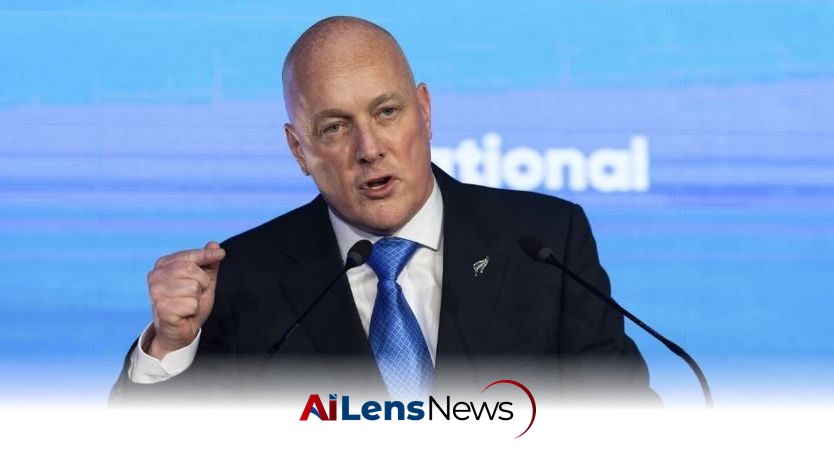


New Zealand Prime Minister Christopher Luxon praised India's economic transformation and called for deeper business engagement during a meeting with Prime Minister Modi.
New Delhi, India Jul 11, 2026 ALN: Auckland: New Zealand Prime Minister Christopher Luxon Saturday hailed India’s “incredible” economic transformation and urged businesses in both countries to deepen engagement to open up new markets and trade opportunities.
Luxon made the remarks at an interaction themed “India-New Zealand: A Winning Partnership”, attended by Prime Minister Narendra Modi, who was on a two-day visit to the country. This visit is part of a broader effort to strengthen diplomatic and economic ties between India and New Zealand, which have been growing steadily over the past few years.
Addressing the gathering, the Kiwi Prime Minister expressed his admiration for India, stating he has been a “great fan” of the country for a long period of time. His personal connection to India traces back to his mid-20s when he worked for Unilever, a major multinational corporation with significant operations in India through its subsidiary, Hindustan Unilever. This connection has given Luxon a unique perspective on the Indian market and its evolution over the years.
Luxon recounted his experiences from his first visit to India in the mid-to-late 90s, a time when the country was undergoing significant economic changes. He noted that during that period, many workers were paid their daily wages in coins, illustrating the economic challenges that India faced at the time. Fast forward to the present, and Luxon highlighted the remarkable progress India has made under Prime Minister Modi’s leadership, citing the lifting of 250 million people out of poverty and the growth of the middle class from 440 million to an expected 750 million by the end of the decade.
“It’s interesting to me that under Prime Minister Modi’s leadership, he has lifted 250 million people out of poverty. There are now 440 million people in the middle class, and about to be 750 million by the end of the decade,” he said, calling it an “incredible transformation.” This transformation is not just a statistic; it reflects the broader changes in the Indian economy, which has shifted from a primarily agrarian base to a more diversified economy with strong contributions from the services and manufacturing sectors.
Luxon emphasized that the transition from low-income to middle-income and eventually to high-income status is not merely inspiring but also presents a wealth of opportunities for collaboration between India and New Zealand. He pointed out that as the 1.4 billion Indian community continues to grow wealthier, the potential for bilateral trade and investment increases significantly.
Stressing the importance of collaboration, Luxon identified several sectors where India and New Zealand could work together more closely. These sectors included food and produce, tourism experiences, educational institutions, and technology. Each of these areas presents unique opportunities for businesses in both countries to leverage their strengths and create mutually beneficial partnerships.
In his address, Luxon referenced a book by Austrian neurologist and psychiatrist Victor Frankl, which posits that government, business leaders, and community leaders are the three primary actors in a society. He urged these groups to come together to realize the vast opportunities that lie ahead for both India and New Zealand. “So I just encourage all of you…responsibility for this relationship also sits with you, and we wish you all the very best as you open up new markets and new opportunities by working together,” Luxon told the business leaders.
He encouraged New Zealand businesses to travel to India and immerse themselves in its diverse consumer landscape, which he described as “the most discerning” in the world. Understanding the preferences and needs of Indian consumers is crucial for businesses looking to succeed in this dynamic market. “Learn about the markets, find the right partners, understand how to tailor your product and service in order to be able to create opportunities both in India and here in New Zealand as well,” he advised.
Prime Minister Modi also addressed the event, extending an invitation to New Zealand’s business leaders to invest in various sectors of the Indian economy. His remarks underscored the potential for collaboration, emphasizing that both nations share democratic values, diversity, and a commitment to sustainable development, which provide a robust foundation for an ambitious, forward-looking economic partnership.
Modi highlighted the significance of the India-New Zealand free trade agreement, which was signed in April this year. He noted that this agreement would add depth and dynamism to the bilateral economic ties, opening new opportunities for market access, investment, and talent mobility. The free trade agreement is expected to facilitate smoother trade flows between the two nations, enhancing economic cooperation and fostering stronger business relationships.
During his visit, Modi also held wide-ranging talks with Luxon, resulting in 18 key outcomes, including the elevation of bilateral relations to the level of strategic partnership. This elevation signifies a commitment from both governments to work closely together on a range of issues, including trade, security, and cultural exchange. Such strategic partnerships are crucial in today’s global landscape, where countries are increasingly looking to strengthen bilateral ties to address common challenges and seize opportunities.
The discussions and agreements reached during this visit are indicative of the growing recognition of the importance of India-New Zealand relations. Both countries stand to benefit significantly from enhanced cooperation, particularly in areas such as technology transfer, education, and sustainable development. As India continues to emerge as a global economic powerhouse, New Zealand is well-positioned to engage with India’s growth story, leveraging its own strengths in agriculture, education, and innovation.
As the world becomes more interconnected, the partnership between India and New Zealand could serve as a model for other nations looking to strengthen their economic ties. The emphasis on collaboration, shared values, and mutual respect is essential for fostering long-term relationships that can adapt to the changing global landscape. The outcomes of this visit and the ongoing dialogue between the two nations will likely pave the way for a more prosperous future for both India and New Zealand.
To learn more about the latest developments in Corporate & Industry Insights, stay updated with our exclusive reports and analyses on AiLensNews.

