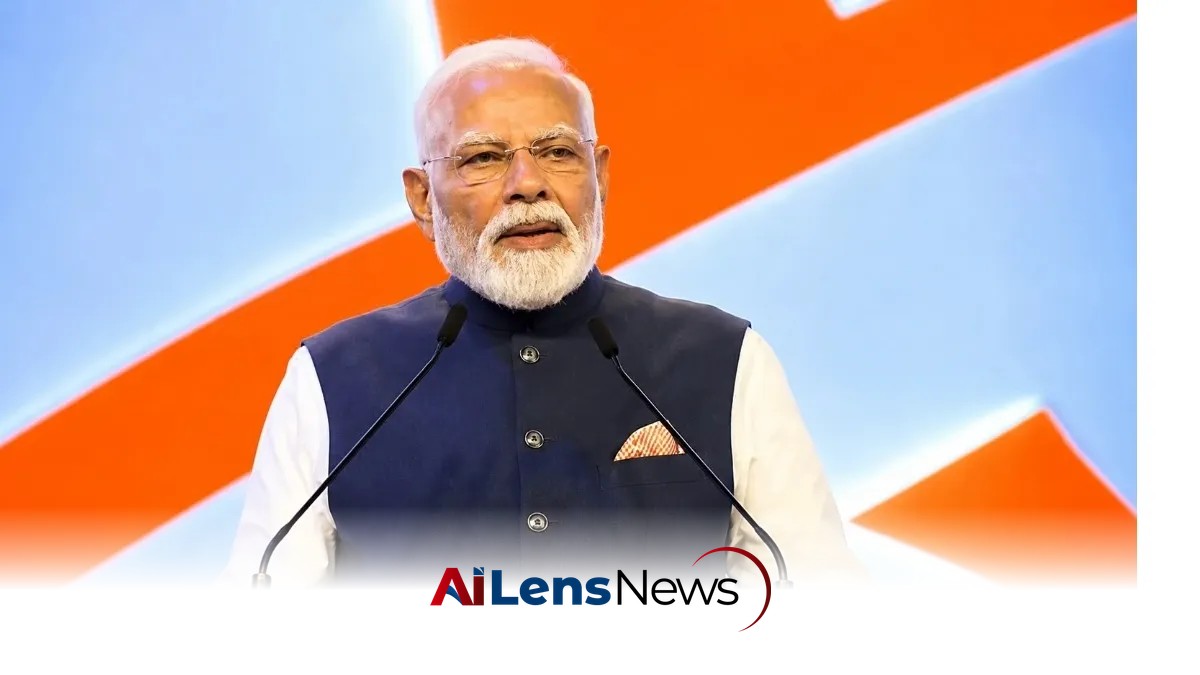


Prime Minister Narendra Modi emphasized India's potential as a global growth hub during a meeting with New Zealand business leaders, highlighting investment opportunities and bilateral trade.
Kohima, India Jul 12, 2026 ALN: AUCKLAND, JUL 11: India is not only a market but a launchpad for global growth, Prime Minister Narendra Modi said on Saturday as he invited New Zealand’s top business leaders to invest in diverse sectors of the Indian economy.
In an interaction with a select group of CEOs and corporate leaders in Auckland, Modi stated that the landmark India-New Zealand free trade agreement—signed earlier this year—would add depth and dynamism to the bilateral economic ties and open new opportunities for market access, investment, and talent mobility.
PM Modi emphasized that the two nations’ shared democratic values, diversity, and commitment to sustainable development provide a robust foundation for an ambitious, forward-looking economic partnership. The context of this statement lies in the historical ties between India and New Zealand, which have seen significant growth in recent years, particularly in trade and investment. This partnership is not only about economic benefits but also about fostering mutual respect and understanding between two democracies that value freedom and human rights.
“In India, we have made reform, perform, and transform the basis of governance. Today, India has policy stability, political stability, and continuity of growth,” he said.
“Therefore, our message to the world is: India is not only a market; India is a launchpad for global growth,” Modi added. This assertion is particularly significant as India positions itself as a key player in the global economy, especially in light of recent geopolitical shifts and the increasing importance of emerging markets.
The prime minister made these remarks shortly after holding wide-ranging talks with his New Zealand counterpart Christopher Luxon, which led to 18 key outcomes, including 10 agreements. These agreements are expected to cover various sectors, enhancing cooperation and facilitating smoother trade flows between the two nations. The discussions between Modi and Luxon reflect a growing alignment of interests, particularly in areas such as technology, agriculture, and renewable energy.
Modi also mentioned a decision to upgrade the bilateral ties between the two countries to the level of strategic partnership. This elevation signifies a deepening of relations that could lead to more collaborative efforts in addressing global challenges, such as climate change, economic recovery post-COVID-19, and regional security.
“This is not just a diplomatic milestone; it is a new resolve for our shared future. This year, a free trade agreement was signed between the two countries in a record time of nine months,” he said.
The quick negotiation and signing of the free trade agreement is indicative of the urgency both nations feel in enhancing their economic ties. The agreement is expected to reduce tariffs and barriers to trade, thus fostering a more conducive environment for businesses from both countries to thrive. This is particularly important as global supply chains are re-evaluated in the wake of the pandemic, with countries looking to diversify their trade partners.
“This will open new opportunities for market access, investment, services, technology, and talent mobility for all of you. I am confident that by working with renewed vigor and enthusiasm, we will double bilateral trade by 2030,” he added. The target of doubling trade reflects a strong optimism about the potential for growth in bilateral relations, especially as both countries seek to recover from the economic impacts of the pandemic.
In the bilateral talks, New Zealand committed to invest USD 20 billion in India over the next 15 years. This substantial commitment underscores New Zealand's recognition of India's potential as a burgeoning market and a strategic partner in the Asia-Pacific region.
“This is not just about investment, but also a commitment to participate in India’s development journey,” Modi told business leaders.
Modi's emphasis on participation in India's development journey highlights the importance of collaborative growth. As India continues to develop its infrastructure and digital economy, foreign investments are crucial for facilitating this growth and ensuring that it is sustainable and inclusive.
“Today, India is the world’s fastest-growing major economy. Our growing middle class, large-scale digital adoption, and infrastructure push make India a unique growth story,” he said. The reference to India's growing middle class is particularly relevant, as this demographic shift is expected to drive consumer demand and innovation in various sectors, making India an attractive destination for investment.
The prime minister also highlighted some of the policy initiatives rolled out by his government to boost economic growth. These initiatives are designed to create a more favorable business environment and encourage foreign direct investment, which is crucial for India's long-term economic strategy.
“To promote manufacturing in India, we have launched the production-linked Incentive scheme. Under this, approximately USD 20 billion of support is being provided in 14 sectors ranging from food processing to textiles,” he said.
This production-linked incentive scheme is a key component of India's strategy to boost domestic manufacturing and reduce reliance on imports. By incentivizing local production, the government aims to create jobs, enhance competitiveness, and build resilience in the supply chain.
“I invite all of you to be a part of this manufacturing momentum. Airports, regional connectivity, air cargo, and tourism are growing rapidly in India,” he stated. The mention of sectors like tourism and air cargo indicates an understanding of the interconnectedness of various industries and the potential for synergies between them.
Modi also discussed potential collaboration between the two sides in the dairy, agriculture, and food processing sectors. Given New Zealand's expertise in dairy and agriculture, this partnership could lead to significant advancements in technology transfer and best practices that could benefit Indian farmers and consumers alike.
“New Zealand has vast expertise in horticulture, dairy science, and forestry. India has strengths in the consumer market, food parks, and agri-tech talent. Together, we can build farm-to-market value chains and global export platforms,” Modi said.
By focusing on building value chains, both countries can enhance their agricultural productivity and ensure food security for their populations. This collaboration could also have implications for global food markets, as both nations work together to increase their export capabilities.
The prime minister invited New Zealand investors and business houses to partner with India in infrastructure development, logistics, clean energy, urban mobility, water management, waste management, and digital economy sectors. These areas are critical for India's sustainable development goals and are in line with global trends towards green energy and smart urban solutions.
Speaking about India’s start-up ecosystem, he called for closer engagement between the private sectors of both countries in the fields of innovation, fintech, and emerging technologies. The start-up ecosystem in India has been rapidly evolving, with a growing number of unicorns and innovative companies emerging across various sectors. This presents an opportunity for New Zealand businesses to collaborate and invest in cutting-edge technologies that could shape the future.
Modi urged the business leaders to expand investment and commercial partnerships and help realize the target of doubling bilateral trade to NZD 7 billion, approximately Rs 35,000 crore, by 2030. This ambitious target reflects both countries' confidence in their economic potential and the importance of sustained efforts to achieve it.
He emphasized that the India-New Zealand economic partnership could become a model for inclusive and sustainable trade and a platform for innovation and prosperity.
This vision of an inclusive and sustainable trade partnership resonates with global calls for responsible business practices and equitable economic growth. As both nations navigate the complexities of the global economy, their partnership could serve as a blueprint for other countries seeking to enhance their economic ties while prioritizing social and environmental considerations.
In conclusion, Prime Minister Modi's remarks in Auckland highlight the growing significance of India as a key player in the global economy and its potential to serve as a launchpad for growth not only for itself but also for its partners. The India-New Zealand partnership stands at a pivotal moment, with opportunities for collaboration across various sectors that could lead to mutual prosperity and a more interconnected world.
To learn more about the latest developments in Corporate & Industry Insights, stay updated with our exclusive reports and analyses on AiLensNews.

