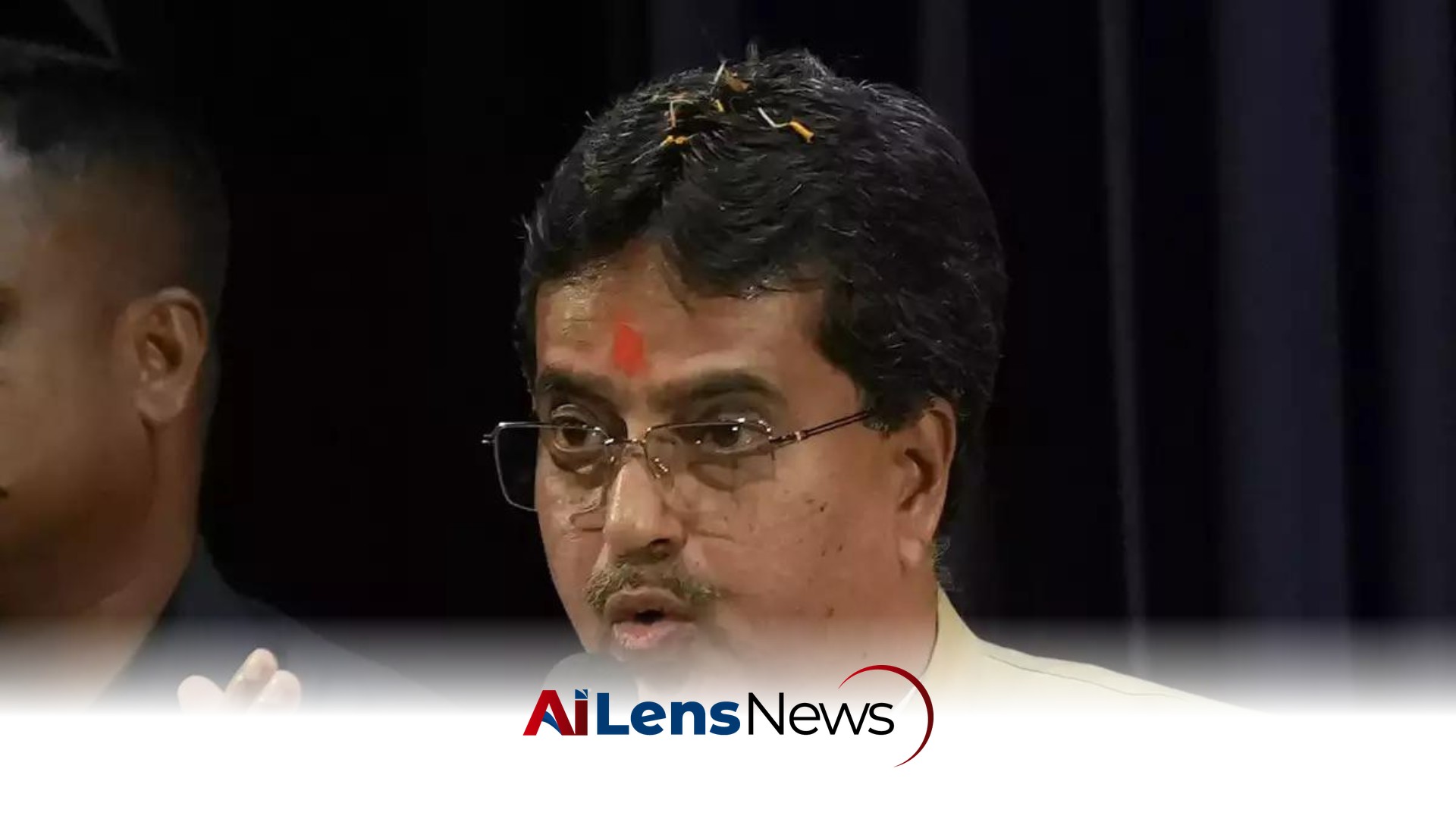


Tripura Chief Minister Dr. Manik Saha emphasizes the need for balanced trade relations between India and Bangladesh, advocating for import duty subsidies on cash crops from Tripura.
Imphal, India Jul 10, 2026 ALN: Agartala: Tripura Chief Minister Dr. Manik Saha has emphasized the importance of establishing mutually rewarding trade ties between India and Bangladesh through the northeastern state of Tripura. His comments came during a media interaction following a meeting with the Bangladesh High Commissioner to India, M. Riaz Hamidullah, at the Destination Tripura Business Conclave. The Chief Minister's remarks reflect ongoing efforts to enhance bilateral trade relations, which are crucial for the economic development of both regions.
Dr. Saha highlighted specific concerns regarding the high import duties imposed by Bangladesh on key cash crops from Tripura, particularly tea and rubber. These crops are vital to the state's economy, and the Chief Minister argued that the current duty structure hampers Tripura's ability to compete effectively in the Bangladeshi market. He urged the Bangladesh envoy to consider providing import duty subsidies for these products, which could help create balanced trade incentives that would benefit both parties.
“During the meeting, I expressed our desire to export our products to the Bangladesh market. Bangladesh imports tea from other countries. We request that Tripura tea be treated equally. If the import duty cannot be reduced, it should at least be made comparable to what is charged for other imports, allowing our tea to access the market. The same reasoning applies to value-added or finished rubber goods,” Dr. Saha explained, underscoring the need for fair treatment in trade policies.
In addition to advocating for Tripura's agricultural exports, Dr. Saha assured the Bangladesh envoy that Tripura would also welcome Bangladeshi products, such as cement, stone chips, and fish, fostering a reciprocal trading environment. “This should be a mutually rewarding give-and-take policy. The trade ties had been frozen for some time, which is detrimental to both parties. All these issues were thoroughly discussed during the meeting,” he added, signaling a willingness to engage in constructive dialogue to resolve trade barriers.
The response from the Bangladeshi High Commissioner, M. Riaz Hamidullah, was equally optimistic. He asserted that beyond trade and commerce, India and Bangladesh should focus on strengthening their relationship through cultural and human connections. “The trade relations between India and Bangladesh are just one aspect of the long-standing relationship between our peoples. I traveled to Tripura by train from Guwahati, and this illustrates the importance of prioritizing the environment and human-to-human relations between our countries,” Hamidullah stated, highlighting the significance of personal connections in fostering bilateral ties.
To further enhance cultural ties, the Bangladesh envoy proposed initiatives such as screening award-winning films from both nations. “We aim to showcase national award-winning Bangladeshi films in India, not for commercial gain, but to strengthen our cultural relations. This will place our trade and commerce in a more strategically solid position. We are already in discussions with Delhi to simplify trade opportunities and are committed to ensuring that these talks continue without interruption,” he explained, emphasizing the potential of cultural exchanges to bolster economic cooperation.
When asked about Bangladesh's willingness to restore trade ties, Hamidullah confidently affirmed, “There should be no doubt about that.” This statement reflects a commitment to improving relations despite the challenges that have arisen in recent years.
It is important to note that India-Bangladesh relations have faced significant challenges, particularly since the ousting of former Prime Minister Sheikh Hasina in August 2024. The political climate has contributed to a deterioration in diplomatic ties, which in turn has impacted trade and economic collaboration between the two nations.
The strained relationship is not only a diplomatic issue but also one that has tangible repercussions on the economies of both countries, particularly in the northeastern region of India. Tripura, which shares a border with Bangladesh, has historically relied on cross-border trade for its economic sustenance. The disruptions in trade due to political tensions have led to significant economic setbacks for the state, which is still in the process of recovering from the impacts of the COVID-19 pandemic and is striving to revitalize its economy.
As a result of the strained relations, Tripura has experienced strategic setbacks, particularly concerning two major connectivity projects that could have significantly boosted the state's economy. The Maitri Setu, a bridge built over the Feni River in South Tripura, remains unoperational despite its completion. This bridge is intended to connect Tripura’s Sabroom with the Chittagong port of Bangladesh, facilitating trade and commerce between the two regions. Similarly, the Agartala-Akhaura railway project, which would shorten the distance between Tripura and Bengal to just 500 kilometers, is also stalled, awaiting inauguration.
The delay in these projects not only hampers economic growth in Tripura but also affects the overall trade dynamics between India and Bangladesh. The potential benefits of improved connectivity are significant, as they could lead to increased trade volumes, enhanced cultural exchanges, and strengthened diplomatic ties. The current situation underscores the need for both governments to prioritize the resolution of outstanding issues that hinder progress.
Moreover, the implications of these stalled projects extend beyond mere economics. They touch upon the broader geopolitical landscape of South Asia, where India and Bangladesh play pivotal roles in regional stability and cooperation. Improved connectivity through projects like Maitri Setu and the Agartala-Akhaura railway could not only enhance bilateral trade but also foster a sense of community and shared purpose among the peoples of both nations.
In conclusion, the statements made by Tripura Chief Minister Dr. Manik Saha and Bangladesh High Commissioner M. Riaz Hamidullah reflect a mutual desire to enhance trade relations and strengthen cultural ties between India and Bangladesh. While challenges remain, particularly in light of recent political developments, the commitment to fostering a more collaborative relationship is evident. The success of these efforts will depend on the willingness of both sides to engage in constructive dialogue and take concrete steps toward addressing the barriers that currently exist in their trade and economic relations. The future of Indo-Bangla trade ties, particularly through Tripura, holds the potential for significant economic benefits, provided that both nations can navigate the complexities of their political landscapes.
To learn more about the latest developments in Corporate & Industry Insights, stay updated with our exclusive reports and analyses on AiLensNews.

