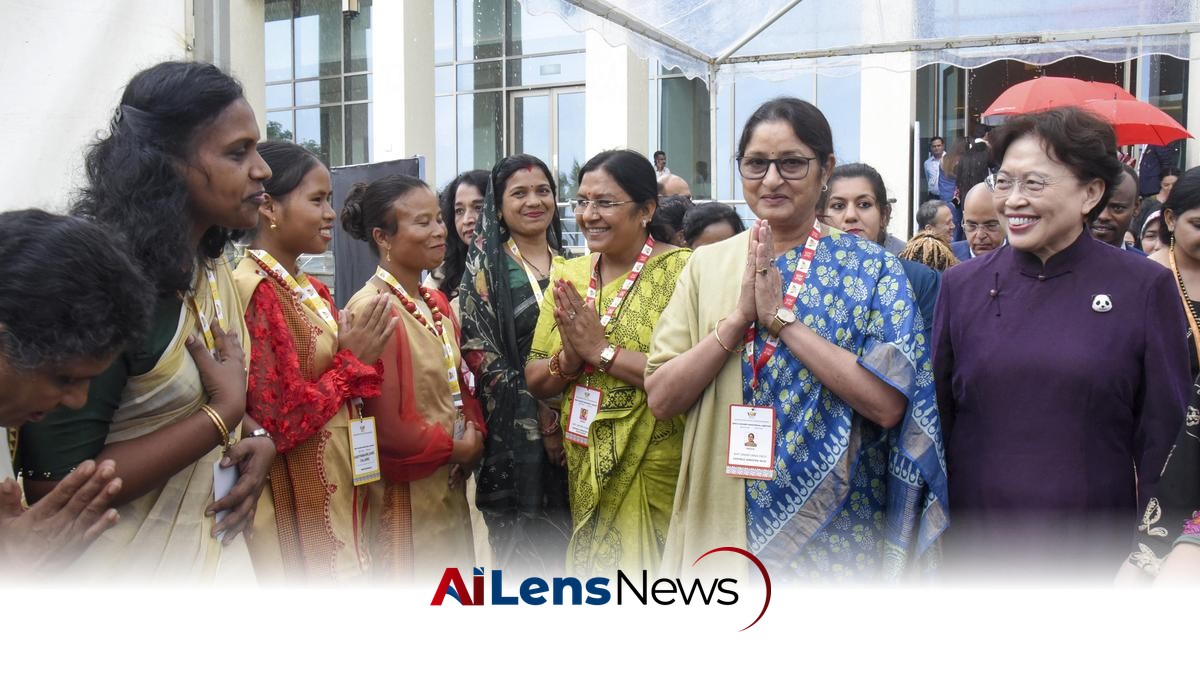


Union Minister Annapurna Devi highlights the importance of BRICS cooperation in enhancing women's leadership and economic opportunities at the Ministerial Meeting.
New Delhi, India Jul 9, 2026 ALN: Union Minister for Women and Child Development Annapurna Devi emphasized the significance of cooperation and knowledge sharing among BRICS nations to advance women's roles as entrepreneurs, innovators, and decision-makers. Her remarks were made during the concluding session of the BRICS Women Ministerial Meeting held in Kochi, which focused on critical discussions about women's empowerment and leadership within the member states.
BRICS, an acronym for Brazil, Russia, India, China, and South Africa, has been a platform for collaboration among emerging economies since its inception. Over time, it has expanded to include additional nations, reflecting a growing recognition of the need for collective action in addressing global challenges. The recent expansion in 2024 to include Egypt, Ethiopia, Iran, Saudi Arabia, and the UAE, followed by Indonesia's inclusion in 2025, signifies a broader commitment to fostering cooperation among diverse economies. This diversity is particularly relevant when discussing women's issues, as each member country brings unique perspectives shaped by its own cultural, social, and economic contexts.
During her address, Minister Devi noted that the thematic discussions and dialogues among delegations underscored the necessity of collaboration among BRICS countries. She stated, "The thematic discussions and dialogue between our delegations highlighted the importance of cooperation and knowledge sharing among BRICS countries." This sentiment reflects a growing understanding that the challenges faced by women in one nation often resonate with those in another, creating an opportunity for shared solutions and strategies.
Furthermore, the Minister pointed out that the discussions focused on expanding economic opportunities for women and promoting digital and financial inclusion across member nations. She remarked, "While strengthening women's leadership, we are continuously working to move forward as entrepreneurs, innovators, and decision-makers for women." This emphasis on entrepreneurship and innovation is crucial, as it aligns with global trends that recognize the economic potential of women's participation in the workforce and leadership roles.
Minister Devi acknowledged the diverse geographical, social, economic, and cultural backgrounds of BRICS countries, emphasizing their shared challenges concerning women's issues. This commonality, she argued, makes the Ministerial Forum a crucial platform for dialogue. "Although we all come from different geographical, social, economic, and cultural backgrounds, there are many issues related to women that are common in our countries. This underscores how important the BRICS Women Ministerial Forum is for advancing dialogue on shared concerns," she stated. The recognition of shared challenges is a critical step toward developing cohesive strategies that can be implemented across borders.
Highlighting the need for increased investment in women's empowerment, she asserted, "Investment in women's empowerment is not just a question of social justice, but also a mandatory condition for inclusive and sustainable development." This statement underscores a vital point: empowering women is not merely a moral imperative but also a strategic necessity for economic growth. Countries that invest in women's education, health, and economic participation often see significant returns in terms of GDP growth, social stability, and overall development.
Minister Devi referenced an exhibition that showcased Prime Minister Narendra Modi's vision of women-led development, noting that products made by women-led Self-Help Groups (SHGs) illustrate the transformative impact of empowering women. The SHG model has been successful in numerous countries, providing women with the resources, training, and support needed to start their own es. This model not only fosters economic independence but also contributes to community development by uplifting entire families and neighborhoods.
"The products prepared by the women of SHGs and their enterprises are a powerful proof that when women get opportunities, resources, and trust, they take not only their families but also society and the economy to new heights," she added. This statement encapsulates the potential of women as agents of change, capable of driving economic and social progress when given the necessary support and opportunities.
Minister Devi expressed gratitude to member countries for adopting the BRICS Women Ministerial Joint Statement, calling it a "historic milestone" that would provide a new direction for discussions related to women within BRICS. The adoption of such a statement signifies a commitment from member nations to prioritize women's issues in their agendas and to work collaboratively toward common goals. It also sets a precedent for future discussions and initiatives aimed at enhancing women's roles in various sectors.
The meeting, which included a cultural program and a gala dinner, facilitated informal interactions among delegates, fostering friendship and mutual understanding. Such informal settings are essential for building relationships that can lead to more effective collaboration in formal discussions. The Minister expressed confidence that the exchange of ideas during the meeting would further deepen BRICS cooperation in the future. This optimism reflects a broader hope that the BRICS framework can evolve to address pressing global issues, including gender equality.
Union Minister of State for Women and Child Development Savitri Thakur and Ministry of Women and Child Development Secretary Anil Malik also addressed the gathering, reinforcing the commitment of the Indian government to women's empowerment. Their participation highlights the importance of governmental support in driving initiatives that promote gender equality and women's leadership.
The two-day meeting, attended by delegates from 11 BRICS member countries, concluded on July 9, 2026. The diversity of the attendees contributed to a rich exchange of ideas and best practices, underscoring the potential for BRICS to serve as a model for international cooperation on women's issues.
As India prepares to host the 18th BRICS Summit in New Delhi in September this year, the discussions from the Women Ministerial Meeting will likely inform the broader agenda of the summit. The presidency of BRICS offers India a platform to elevate women's issues on the global stage, aligning with its domestic priorities of enhancing women's participation in all spheres of life. This alignment is crucial as it reflects a commitment to not only addressing women's issues within India but also advocating for these concerns at an international level.
In conclusion, the BRICS Women Ministerial Meeting represents a significant step toward advancing women's leadership and empowerment across member nations. The emphasis on cooperation, knowledge sharing, and investment in women's potential highlights the critical role that women play in driving sustainable development. As BRICS continues to evolve, the commitment to women's issues will be essential in shaping a more inclusive and equitable future for all member countries.
To learn more about the latest developments in Corporate & Industry Insights, stay updated with our exclusive reports and analyses on AiLensNews.

