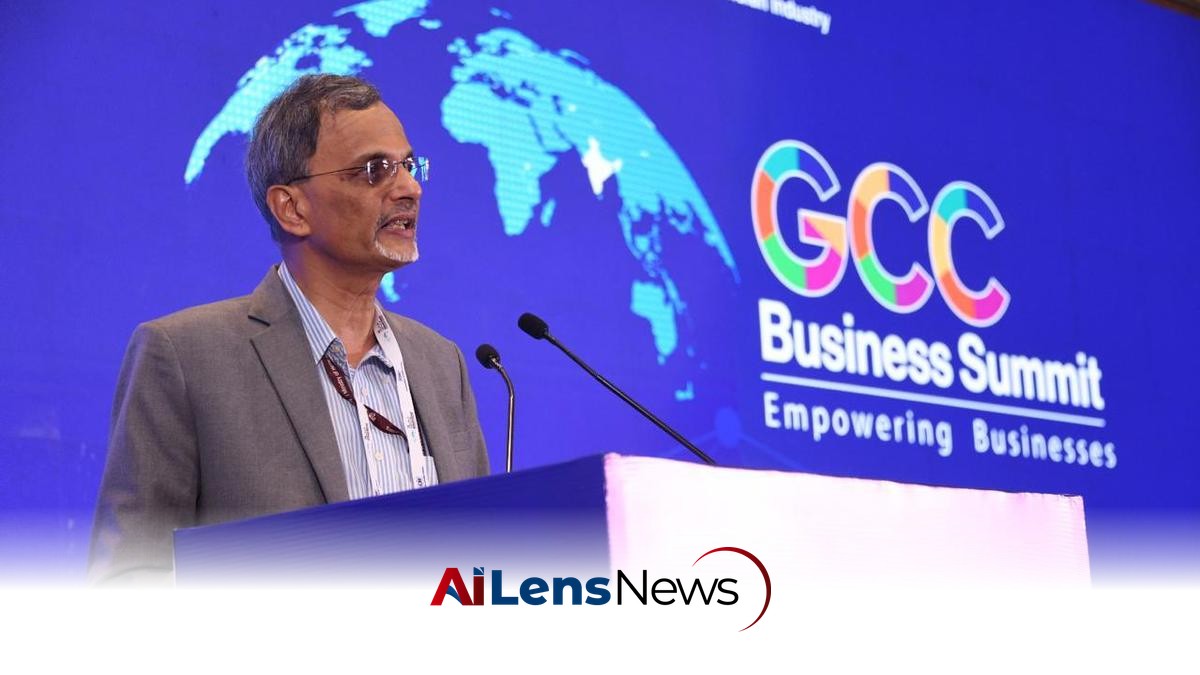


India's GCC jobs face lower AI risk, but complacency may jeopardize their cutting-edge status, warns Chief Economic Adviser.
New Delhi, India Jul 9, 2026 ALN: India’s Global Capability Centres (GCCs) play a pivotal role in the country’s economy, serving not only as low-cost support structures but also as hubs of advanced and innovative work. Chief Economic Adviser (CEA) V. Anantha Nageswaran, speaking on July 9, 2026, underscored the importance of these centres, asserting that they are at a relatively lower risk of being replaced by Artificial Intelligence (AI). This assertion highlights the unique positioning of India’s GCCs in the global landscape, which has evolved significantly over the past few decades.
Global Capability Centres, often referred to as Global In-house Centers (GICs), have become integral to multinational corporations, enabling them to leverage India’s vast pool of skilled talent. These centres are involved in various sectors such as finance, automotive, semiconductor design, pharmaceuticals, and consumer products, which require a high level of expertise and innovation. Nageswaran noted that global banks, for instance, run their risk systems and trading platforms out of major Indian cities like Mumbai and Bangalore. Similarly, automotive manufacturers design their vehicles’ embedded systems from Chennai and Pune, while pharmaceutical companies conduct critical clinical analytics from Indian GCCs.
According to Nageswaran, the intellectual property generated in these centres is substantial, with numerous patents filed and products developed and shipped from India. This trend signifies a shift from merely providing low-cost services to creating high-value products and solutions. The increasing involvement of Indian professionals in global roles further exemplifies the evolution of these centres, positioning India as a key player in the global economy.
Despite the positive outlook, the CEA addressed concerns regarding the potential threats posed by advancements in AI. He acknowledged that while certain aspects of the GCC model may be vulnerable, the majority of Indian centres are not primarily engaged in routine, repetitive tasks that are most susceptible to automation. Nageswaran articulated that the work which is routine, repetitive, and rule-bound is precisely the type of work that AI can perform more efficiently and cost-effectively.
“If a centre’s value relies solely on executing simple tasks at low cost, then its value is genuinely at risk,” he explained, emphasizing the need for GCCs to evolve and focus on higher-value tasks that cannot be easily automated. However, he reassured stakeholders that most Indian centres are moving beyond this outdated model. He noted that AI technologies require human intervention for design, deployment, governance, and accountability. “Artificial intelligence does not build, deploy, or govern itself,” he clarified. “Someone must design these systems, train them, test them, and hold them accountable.”
This assertion highlights the expanding scope of work in GCCs, which is increasingly focused on complex problem-solving and innovation—areas where human expertise is irreplaceable. Nageswaran pointed out that the responsibility for failures in AI systems ultimately lies with humans, indicating that the demand for skilled professionals who can manage and oversee these technologies is likely to grow rather than diminish.
While the current advantages of India’s GCCs are noteworthy, Nageswaran warned against complacency. He cautioned that stagnation could allow other nations to catch up and replicate India’s successful model. “Other countries are observing us and emulating our strategies,” he asserted, highlighting the competitive nature of the global market for GCCs. As operational costs rise and certain skill areas become increasingly competitive, India must remain vigilant and proactive in maintaining its position as a leader in this sector.
One of the critical challenges faced by India is the rising operational costs associated with running GCCs. As wages increase and the demand for skilled talent grows, it becomes essential for firms to transition from being mere cost centres to capability centres that offer high-value services. Nageswaran emphasized the importance of government support in this transition, indicating that a collaborative approach among firms, educational institutions, and the government is vital for sustaining growth and innovation.
“Skilling is essential,” Mr. Nageswaran noted, pointing out that while India produces a large number of graduates annually, many are not job-ready upon graduation. Estimates suggest that fewer than half of these graduates are adequately prepared for the workforce on day one. This gap in readiness underscores the need for a more integrated approach to education and industry collaboration.
Bridging this gap requires a concerted effort from universities, industry leaders, and government entities to work together simultaneously rather than sequentially. This collaboration can help ensure that graduates acquire the skills and knowledge necessary to thrive in the rapidly evolving job market, particularly in sectors where GCCs are expanding their capabilities.
In conclusion, Mr. Nageswaran stressed that India must continuously earn its position in the global capability centre market. “The moment we believe we have arrived is when others start to catch up,” he warned. This statement serves as a reminder of the dynamic nature of the global economy and the need for constant innovation and adaptation. Rather than celebrating current successes prematurely, stakeholders are encouraged to view these achievements as foundational milestones for future growth and development.
As India navigates the challenges and opportunities presented by AI and the global market, the focus must remain on enhancing capabilities, fostering innovation, and ensuring that the workforce is adequately prepared to meet the demands of tomorrow. The journey ahead requires vigilance, collaboration, and a commitment to continuous improvement to maintain India’s competitive edge in the realm of Global Capability Centres.
To learn more about the latest developments in Corporate & Industry Insights, stay updated with our exclusive reports and analyses on AiLensNews.

